
News
2026-02-12

OEM smart glasses procurement in the US is accelerating as multiple industry estimates forecast strong compound annual growth over the next 5–10 years, driven primarily by enterprise AR adoption and industrial use cases. This brief gives procurement teams a concise, data-driven snapshot.
Global microdisplay CAGR is surging in the mid-20s. For US buyers, this translates to ruggedized, field-service capable designs over consumer aesthetics.
If vertical integration and firmware differentiation matter, target OEM partnerships with clearly scoped NRE (Non-Recurring Engineering) and IP clauses.
| Feature | Consumer White-Label | Enterprise OEM (Recommended) | User Benefit |
|---|---|---|---|
| Luminance | 200 - 300 nits | 500+ nits | Visible in bright daylight/factory floors |
| Battery Life | 2 - 3 Hours | 6 - 8 Hours | Full-shift operation without recharging |
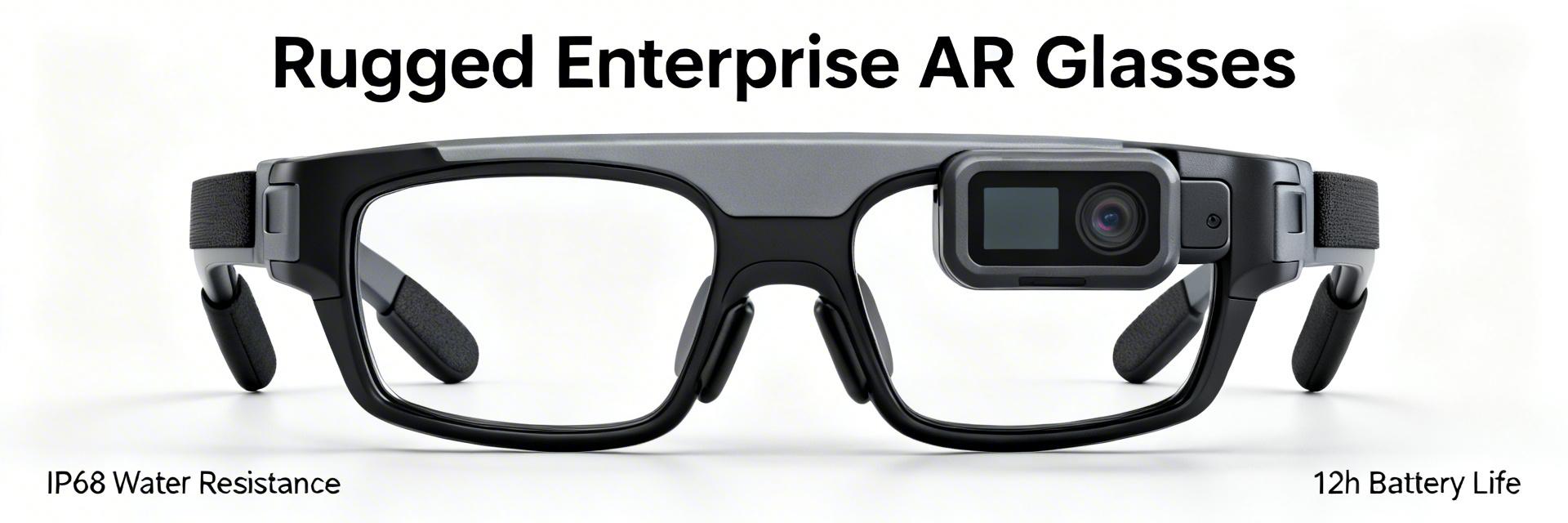
| Ingress Protection | IPX4 (Splash) | IP65 / IP67 | Dust-proof & washable for hygiene |
| Weight Distribution | Front-heavy | Balanced / Headband | Reduces neck strain & long-term fatigue |
The supplier ecosystem splits into clear tiers where technical risk concentrates at the microdisplay layer. Tier-1 partners (Microdisplays) should be scored on technology maturity, while Tier-3 (EMS) focus on QA and lead times.
Target **Wi-Fi 6/5G** and **Edge AI capable SoCs** for on-device inference. Specify latency targets **
"When designing high-performance OEM glasses, the biggest pitfall isn't the display—it's thermal management. A 95% efficient power converter is useless if your PCB layout doesn't account for heat dissipation near the temples. Always request a thermal map at 100% SoC load during the RFQ phase."
Hands-free checklist overlays and remote expert video calls in hazardous environments.
Hand-drawn schematic, non-precise engineering diagram
Vital sign monitoring and DICOM image projection during surgical procedures.
Hand-drawn schematic, non-precise engineering diagram
Translate current market momentum into a disciplined procurement plan: define measurable specs up front, map critical components to supplier tiers, and require factual performance evidence. For OEM smart glasses procurement, prioritize optics and microdisplay sourcing, insist on concrete test data, and protect IP and change control contractually.
Create a one-page RFQ that lists the three critical specs for your use case (FOV/luminance/latency), requires supplier test reports, and mandates factory FAT (Factory Acceptance Testing) before pilot shipments.




{{ boxName }} ({{ dataList?.length || 0 }} Items)
{{ val.manufacturer || val.en_manufacturer || '' }}
auto.lang_Quantity: {{ val.quantity }}
auto.lang_null