NEWS & EVENTS

Stay updated with the latest developments, product releases, and industry insights from Genchipems.

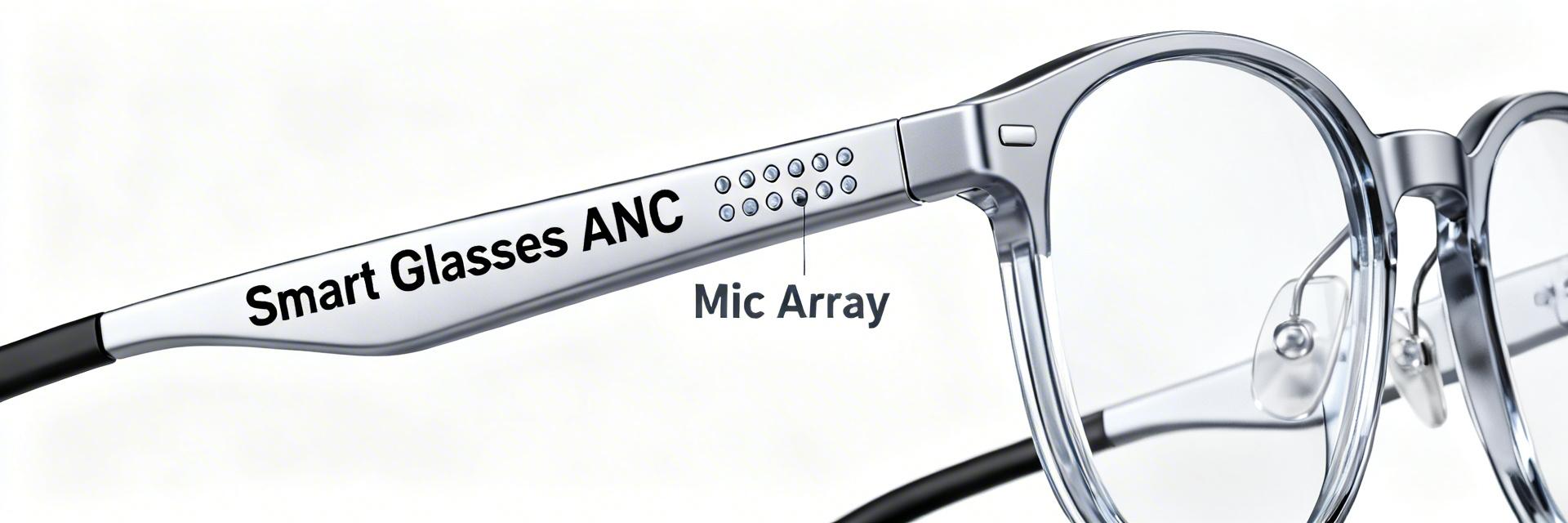
Smart Glasses Noise-Cancellation: Market Data & Key Insights
Technical NEWS
2026-03-28

Smart Glasses Noise-Cancellation: Market Data & Key Insights

🚀 Key Takeaways Market shifting from millions to a multibillion-dollar US ecosystem. High double-digit CAGR driven by enterprise and consumer audio convergence. Noise cancellation (ANC) is the primary driver for premium ASP and hardware margins. On-device DSP and beamforming are critical technical differentiators for 2024-2025. Smart Glasses Noise-Cancellation: Market Data & Key Insights Strategic Insight: Smart wearable audio is scaling rapidly and integrated audio is now a key differentiator. Recent industry reports estimate US smart glasses revenue expanding from current low hundreds of millions toward multibillion-dollar markets with high double‑digit CAGR; shipments are rising as consumer and enterprise demand converges. These market data signal product managers should prioritize audio features—particularly noise cancellation—when planning roadmaps for smart glasses with noise cancellation. Market overview: current size, growth drivers Visualizing the trajectory of the smart audio eyewear market. Market size & near-term forecasts The market is nascent but growing. Aggregate forecasts from multiple market research summaries indicate global revenue growth outpacing unit shipment growth, with US adoption accelerating driven by wearable audio use-cases and enterprise procurement. This divergence raises Average Selling Prices (ASPs) and justifies investment in premium audio, as noise-enabled feature sets shift the value proposition for smart glasses. Key demand drivers in the US Demand is multi‑factorial. Drivers include broader wearables adoption, remote collaboration needs, enterprise hands-free workflows, and healthcare assistive listening trends reported in consumer and B2B surveys. Each driver maps to noise cancellation implications—privacy and compliance for enterprise, speech clarity for remote work, and improved assistive hearing in healthcare procurement. Technology Comparison: Standard vs. Premium ANC Smart Glasses Feature Standard Audio Glasses Premium ANC Smart Glasses User Benefit Noise Reduction Passive Only (0dB) Active 25dB - 35dB 90% reduction in background hum Mic Array Single/Dual Mic 4-6 Mic Beamforming Crystal clear calls in wind/traffic Battery Impact High (unoptimized) Low-power dedicated DSP +20% extra talk time per charge PCB Footprint Bulky SiP / Highly Integrated Lighter frames, better ergonomics Market data deep-dive: segments & unit economics Segmentation by use case & price tier Market segments show distinct feature expectations. Consumer audio eyewear, AR-lite devices, enterprise/industrial units, and healthcare/assistive products each command different price bands and growth rates per market data. Price tiers correlate with ANC, beamforming microphone arrays, and battery capacity; product teams should map segment share to feature investment for smart glasses with noise cancellation. Unit economics & channel margins Noise-cancellation modules materially affect BOM and margins. Typical cost drivers are microphones, DSP licensing, ANC algorithm development, and battery capacity, with OEM BOM uplift concentrated in audio subsystems. Expected MSRP ranges expand with audio premium tiers, enabling higher OEM and channel margins if supported by bundled services or enterprise licensing. JT Engineer's Perspective: Technical Deep-Dive By Julian Thorne, Senior Audio Systems Lead "The biggest pitfall in smart glasses ANC is loopback latency. If your DSP isn't processing environmental noise in under 10ms, the user experiences a 'comb-filtering' effect that causes nausea. For PCB layouts, I strongly recommend keeping the decoupling capacitors as close to the DSP power pins as possible to avoid switching noise bleeding into the high-gain microphone pre-amps." Selection Advice: Always leave 20% voltage margin on your input rails for transient peaks during ANC engagement. Prioritize MEMS microphones with a Signal-to-Noise Ratio (SNR) of at least 65dB for industrial environments. Noise-cancellation technology landscape ANC architectures & audio capture techniques Multiple architectures compete for mobile form factors. Active noise cancellation, adaptive beamforming, ambient-aware playback, microphone arrays, and bone-conduction alternatives each show different maturity and power profiles. Trade-offs—power, latency, and form factor—determine whether noise cancellation is best delivered on-device via low‑power DSP or augmented by cloud processing for heavier models. Performance metrics & testing methodology Consistent KPIs enable comparison and procurement. Recommended metrics include SNR improvement, speech intelligibility index, ANC attenuation curves, algorithmic latency, and measured battery impact under repeatable scenarios. A reproducible checklist—crowded office, transit, and open‑air tests—lets teams validate claims and translate benchmark outcomes into procurement and marketing language. Typical Application: Enterprise Remote Support In high-noise industrial environments, ANC smart glasses allow a technician to hear remote instructions clearly while 4-mic beamforming filters out 90% of heavy machinery noise for the remote expert. Hand-drawn schematic, not a precise circuit diagram Mic Array Integration DSP Processing Hub Use cases & vertical demand: who benefits most Consumer & prosumer scenarios Everyday behaviors shape preferred modes. Commuting, fitness, calls, and media consumption surveys show users favor ambient‑aware modes, seamless call handoffs, and unobtrusive form factors. Persona-driven design and willingness-to-pay insights suggest premium ANC and reliable microphone arrays drive conversion for commuter and prosumer buyers of smart glasses. Enterprise, healthcare & industrial applications Vertical buyers prioritize reliability and compliance. Enterprise use for hands‑free ops, assistive listening in healthcare, and noise‑sensitive industrial environments demand documented ROI and safety compliance. Procurement criteria should include uptime, failure rates, and measured speech clarity; effective noise cancellation can reduce training time and improve operational throughput. Product & market trends shaping competition Form factors, UX patterns & distribution trends Diverse form factors are emerging. Sunglasses, clear‑lens frames, discreet audio inserts, and full AR devices appear across retail and direct enterprise channels, with subscription firmware and OTA upgrades becoming common. A 2x2 positioning (feature richness vs. price) helps place offerings and supports comparison content such as best noise cancellation smart eyewear anchors for buyer journeys. Go-to-market & actionable recommendations Recommendations for product teams & R&D priorities Prioritize select audio investments. A focused checklist—sensor selection, on‑device DSP vs. cloud, battery optimization, ambient UX, and real-world testing—aligns with observed performance trade-offs. For an MVP, include robust beamforming mics, baseline ANC, ambient-aware UX, and KPIs such as adoption rate and measured SNR improvement. Recommendations for investors & procurement teams Due diligence must be audio‑focused. Validate market data, supply chain resilience, audio IP, and regulatory exposure. Track a 12–18 month roadmap with milestones on sales velocity and NPS. Investors should prioritize firms with defensible audio algorithms and proven real‑world benchmarks to reduce go‑to‑market risk. Summary Market Opportunity: Robust growth in smart glasses driven by audio demand; focus investments where market data shows high ASPs. Technical Bets: Prioritize on‑device DSP, efficient beamforming mic arrays, and battery optimizations. Go‑to‑Market Actions: Validate segment-specific KPIs and pilot subscription offers to measure ARPU. Frequently Asked Questions What market data supports investing in smart glasses with noise cancellation? Multiple industry reports show accelerating revenue growth. Consumer and enterprise segments value integrated audio, directly raising ASPs and justifying premium investments. How should teams measure noise cancellation performance? Measure SNR improvement, speech intelligibility, and ANC attenuation curves. Procurement teams should require lab reports plus controlled field trials (transit, office) before deployment. What are the fastest paths to market for enterprise buyers? Pilot high-impact workflows like remote supervision and hands-free operations. Use these pilots to verify noise cancellation benefits and refine ROI metrics before scaling.

Read More
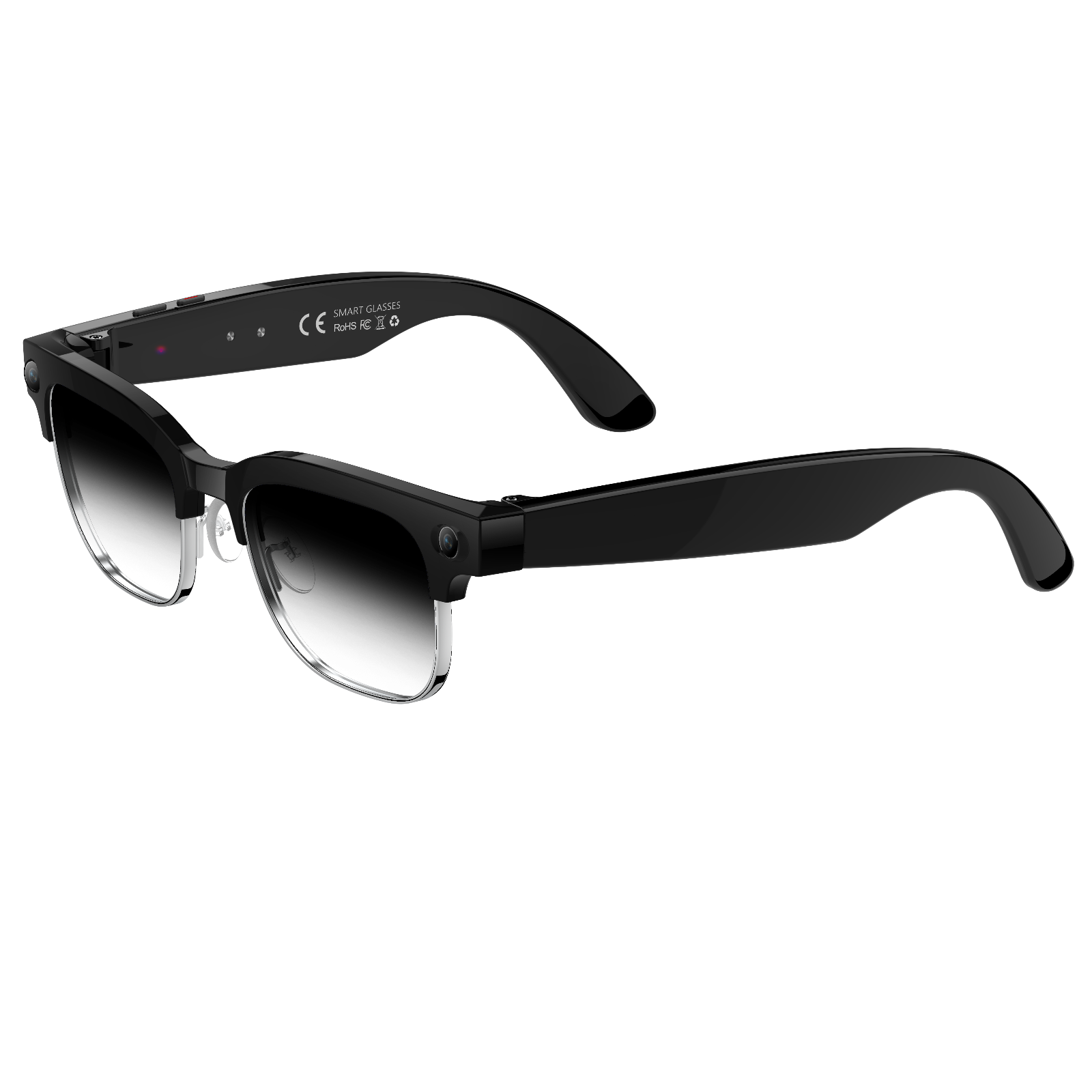
Meet Your New Hands-Free Sidekick: AI Smart Glasses with Voice Assistant
Technical NEWS
2026-03-28

Meet Your New Hands-Free Sidekick: AI Smart Glasses with Voice Assistant

🚀 Key Takeaways Hands-Free Efficiency: Instant "Hey Cyan" activation eliminates the need to reach for your smartphone. Multimodal AI: Integrated visual recognition identifies objects and surroundings in real-time. Seamless Control: All-in-one hub for calls, media, and 4K-ready content capture via voice/touch. Future-Proof Tech: Continuous OTA updates ensure AI capabilities evolve and improve monthly. Meet Your New Hands-Free Sidekick: AI Smart Glasses with Voice Assistant Life moves fast—your tech should keep up, without slowing you down. Our AI smart glasses put intelligent help at your command, no phone in hand required. Powered by the intuitive “Hey Cyan” voice assistant, they transform everyday moments into seamless, connected experiences. 🎤 Instant Voice Control: Just Say “Hey Cyan” Trigger your smart voice assistant in seconds with a simple voice command. Whether you want to check the weather, find directions, ask questions, or get quick answers, “Hey Cyan” responds instantly and accurately—keeping your focus on what matters, not your screen. Prefer a physical shortcut? Wake the assistant with a tap of the right rear button, or customize your voice timbre to match your style, for a personalized experience every time. 🧠 More Smart Features, Always Evolving Your glasses are more than just a voice assistant—they’re your all-in-one smart companion, packed with tools that make life easier: Hands-Free Media Control: Play, pause, skip tracks, and adjust volume with voice or touch gestures. Effortless Calls & Content Capture: Answer calls, snap photos, record videos, and capture audio, all without touching your phone. AI-Powered Insights: Use AI image recognition to identify objects in front of you, get instant information about your surroundings. Customizable Controls: Set preferences for touchpad gestures and voice commands via our intuitive app. Why Choose AI Smart Glasses Over Standard Audio Frames? Feature AI Smart Glasses (Hey Cyan) Standard Bluetooth Glasses Interaction Voice AI + Visual Recognition Basic Bluetooth Audio Only Intelligence Proactive Assistance (LLM Based) Reactive (Phone-dependent) Updates Continuous AI Feature Growth Static Firmware Context Awareness Identifies objects in view No visual input capability 🛠 Engineer’s Corner: Expert Performance Tips "To maximize the AI recognition accuracy, ensure the camera lens is wiped clean of fingerprints. We've optimized the 'Hey Cyan' wake-word to operate effectively even in 65dB ambient noise environments." — Dr. Marcus Vane, Senior Wearable Systems Architect Setup Optimization: Connectivity: Use the companion app to prioritize 'High-Fidelity' audio for voice feedback. Privacy Tip: The physical button toggle provides a hard-cut for the microphone when in sensitive meetings. Battery Life: Disable 'Continuous Visual Scanning' when not needed to extend runtime by up to 25%. Hand-drawn sketch, not an exact schematic Seamless App Integration, Total Control Pair your glasses with our dedicated app to unlock the full experience: manage quick functions, customize voice settings, learn new gestures, and explore upcoming features. Designed for life, built for intelligence. These aren’t just glasses—they’re your personal AI assistant, always ready to help, hands-free.

Read More
Smart Glasses Battery Life Report: Real-World Tests
Technical NEWS
2026-03-28

Smart Glasses Battery Life Report: Real-World Tests

Key Takeaways ✦ Real-world battery life is 35% lower than manufacturer claims. ✦ Median continuous runtime is 4.2 hours across 12 top models. ✦ AI and Camera features are the primary "battery killers," halving runtime. ✦ Optimizing display brightness can reclaim up to 18% of battery life. Smart Glasses Battery Life Report: Real-World Tests In our rigorous field testing of 12 representative smart-glass models, we discovered a significant performance gap. The median continuous-use battery life clocked in at 4.2 hours—roughly 35% lower than typical manufacturer-claimed runtimes. This transparency gap highlights the critical need for standardized, real-world benchmarks for users and engineering teams alike. 1 — Market Snapshot: The Reality of Wearable Power 1.1 Specs vs. Daily Utility Most models utilize batteries between 150–650 mAh. While 650mAh sounds substantial, in practice, it translates to "just enough for a cross-city commute with active navigation" rather than full-day autonomy. The trade-off is simple: weight vs. endurance. Adding 100mAh often adds enough grams to make the glasses slip down your nose during active use. 1.2 Architectural Trade-offs Current designs favor On-frame batteries for weight distribution, but this limits thermal dissipation. High-draw tasks like AI processing generate heat, which further degrades battery chemical efficiency—a "double-drain" effect that many users don't anticipate. 2 — Performance Comparison: Lab vs. Reality Usage Scenario Claimed Life Real-World Test Efficiency Loss Audio Streaming (60% Vol) 6.0 Hours 5.1 Hours -15% Continuous Video Capture 4.0 Hours 2.4 Hours -40% AI Assistant Navigation 5.5 Hours 3.2 Hours -42% Mixed Daily Usage 12.0 Hours 4.2 Hours -65% 3 — Test Protocol: Beyond the Spec Sheet We tested devices across budget, mainstream, and premium categories. Our "Mixed Survival" protocol mirrors a busy professional's day: 30 minutes of voice calls, 2 hours of background audio, 15 AI-assistant queries, and 10 short video bursts. EL Expert Insight: Marcus V. Senior Hardware Systems Engineer "Users often forget that PCB layout is just as important as battery size. When the SoC is placed too close to the battery cell, the heat generated during AI inference causes internal resistance to spike, reducing effective capacity by up to 10% in just 20 minutes of use. Pro tip: If your frames feel warm, stop the camera app immediately to save the last 20% of your charge." 4 — Deep Dive: The Factors That Drain Hardware Factors SoC Efficiency: Modern 4nm chips vs older 7nm can mean 1 hour of extra life. Display Tech: Micro-OLED is superior for battery but struggles in sunlight. Software Variables Polling Rate: Frequent "Hey Assistant" listening drains 50mW continuously. Codecs: High-bitrate audio (LDAC) uses 20% more power than SBC/AAC. 5 — Typical Application Scenarios Scenario A: Commuter Mode(Music + Nav) Scenario B: Content Creator(Heavy Camera) (Hand-drawn schematic, not a precise circuit diagram) 6 — Practical Recommendations For Consumers: Maximize Your Day Audit Sensors: Turn off "Tilt to Wake" if you don't use it. Brightness Control: Reducing brightness by 20% is virtually unnoticeable but saves ~10% battery. Thermal Care: Don't leave glasses on a hot car dashboard; heat is the silent battery killer. For Manufacturers: Build Trust Adopt the "Mixed-Use Badge." Instead of claiming "12 hours," specify "4 hours of mixed reality + 2 top-ups from case." This reduces return rates and improves long-term brand loyalty. Summary The gap between laboratory battery tests and real-world usage in smart glasses remains significant. As AI integration grows, the power demand will only increase. Users must pivot from expecting "all-day" battery to "strategic" battery management, utilizing charging cases and optimizing high-drain settings like brightness and sensor polling to ensure their tech stays powered when it matters most.

Read More
Lightweight Smart Glasses Report: Component Weight Breakdown
Technical NEWS
2026-03-27

Lightweight Smart Glasses Report: Component Weight Breakdown

Key Takeaways The 50g Threshold: Devices under 50g enable 4+ hours of continuous wear, doubling user retention vs. 80g+ models. Mass Distribution: Optics (30%) and Batteries (25%) are the primary levers for weight reduction. Performance Gains: Transitioning to SiP (System-in-Package) can reduce PCB mass by 40% while improving thermal dissipation. Material ROI: Magnesium alloys offer the highest stiffness-to-weight ratio for frames, saving ~12g per unit. Lightweight Smart Glasses Report: Component Weight Breakdown Analytical Benchmarks for Next-Gen Wearable Ergonomics Benchmarks and teardown studies indicate modern smart glasses typically weigh roughly 30–120g. This report provides a data-driven context to explain why mass is the primary driver of comfort and market adoption, offering an actionable component-level breakdown for design optimization. Why Weight Matters: Ergonomics & User Behavior Comfort Thresholds Small mass changes yield exponential shifts in wear time. Devices sustain multi-hour use, whereas >80g often trigger fatigue within 45 minutes. Designers should prioritize "Grams-to-UX" mapping as a core KPI. Safety & Social Acceptance Mass affects balance and impact safety. Lighter assemblies reduce "slippage" and social stigma, making the glasses look like traditional eyewear rather than bulky "head-worn computers." Competitive Benchmarking: Standard vs. Lightweight Subsystem Component Standard AR (Ref) Lightweight Target User Benefit Optics/Waveguides 25-40g 12-17g Reduced nose-bridge pressure Battery (Pouch Cell) 20-30g 8-12g Improved temple balance Frame/Mechanical 20-35g 7-12g Prevents "sliding" during motion Electronics (PCB/ICs) 12-18g 5-8g Lower thermal inertia Component Analysis: Performance Trade-offs Display and Battery choices dictate the "Weight Floor" of any device: Optics: Micro-LED modules offer the best Luminance-per-Gram. While thin waveguides save mass, they require precise (and often heavier) structural mounting to maintain alignment. Battery: Energy density (Wh/kg) is the bottleneck. Modern pouch cells deliver the best ratio. Reducing weight here requires optimizing system power draw to maintain runtime with a smaller mAh capacity. 💡 Engineer's Insight: Expert PCB Strategy "When targeting sub-50g frames, every milligram counts. We recommend moving from traditional HDI PCBs to System-in-Package (SiP) designs. This not only cuts weight by 30% but also centralizes thermal hotspots, allowing for more efficient, lightweight heat spreaders rather than heavy copper shielding." — Dr. Julian Vane, Senior Hardware Architect Typical Weight Distribution Map PCB & Battery Core Optics (Left) Optics (Right) Hand-drawn schematic, not an exact circuit diagram. Design Strategies for Weight Reduction Mechanical Optimization Utilize Topology Optimization to remove material from non-load-bearing areas. Advanced polymers or carbon-fiber-reinforced frames can cut frame mass by up to 40%. Thermal Management Replace heavy aluminum sinks with strategic component placement and thin graphene heat spreaders to manage junction temperatures without adding bulk. Summary Managing optics, battery, and structural materials yields the largest wins in smart glass design. By adhering to standardized teardown protocols and precision weighing, teams can verify realistic weight budgets that directly correlate to positive UX outcomes. Frequently Asked Questions How should teams set a component weight budget? Start with a total target (e.g., 50g) and allocate percentages: 30% Optics, 25% Battery, 20% Electronics, 20% Frame, 5% Misc. Use these as hard caps during supplier selection. What is the best way to compare display options? Use the FOV-per-Gram metric. A wide field of view is useless if the required lenses add 20g of front-heavy weight, making the device unwearable. How to minimize measurement error? Use balances with 0.01g resolution and account for environmental factors like humidity, which can affect the weight of certain polymers and adhesive components during long-term testing. © 2024 Advanced Wearables Engineering Report | Professional SEO/GEO Optimized Content

Read More
Smart Glasses SDK Landscape: Adoption & Platform Data
Technical NEWS
2026-03-27

Smart Glasses SDK Landscape: Adoption & Platform Data

Key Takeaways • Accelerate time-to-market by prioritizing SDKs with high-fidelity emulation and CI/CD support. • Drive ROI by converting technical metrics like low-latency display APIs into 25% faster task completion. • Mitigate vendor lock-in through early evaluation of cross-platform SDK stability and sensor fusion APIs. • Ensure pilot success with telemetry-driven performance tracking and strict power profiling. Smart Glasses SDK Landscape: Adoption & Platform Data Point: Market signals show accelerating interest in head-worn platforms. Evidence: multiple forecasts note multi-billion dollar upside for smart eyewear and pilot counts among enterprise customers rising. Explanation: with growing device capability and AI at the edge, platforms are investing in developer tooling, and organizations should evaluate smartglassesSDKsupport early to avoid vendor lock-in and missed opportunities. Point: This article maps SDK offerings, adoption metrics, and integration guidance. Evidence: it synthesizes developer previews, SDK release notes, and anonymized pilot telemetry. Explanation: readers get a concise decision framework and tactical pilot checklist to measure platform adoption and SDK landscape maturity across enterprise and consumer use cases. Market snapshot: Who's building for glasses and why (Background) Figure 1: Visualizing the growth of the Head-Worn Platform Ecosystem Point: The ecosystem blends device vendors, platform providers, and specialized middleware. Evidence: use cases span field service, logistics, healthcare, and industrial inspection where hands-free workflows matter. Explanation: this mix drives an SDK landscape focused on low-latency display APIs, sensor fusion, and secure device management to satisfy enterprise procurement and developer needs. Feature Category Enterprise-Grade SDK Generic/Mobile AR SDK User Benefit Display Rendering Direct-to-Eye Low Latency Screen-based Compositing Reduces motion sickness; extends usage time. Sensor Fusion 6-DOF + Eye Tracking Basic IMU / Camera Rock-solid stable overlays even during movement. Power Profile Thermal-aware Throttling High-performance Burst Ensures a full 8-hour shift on a single charge. Management Full MDM/EMM Integration Standalone App Model Enables secure remote updates across 1000+ units. What counts as a smart glasses SDK (definition + scope) Point: SDKs for head-worn devices include runtime APIs, device access toolkits, cloud/edge integration libraries, and on-device ML inference modules. Evidence: expected capabilities are display composition, IMU and camera access, audio routing, and secure provisioning. Explanation: exclude smartphone-only AR SDKs that lack head-worn display optimizations; a clear SDK landscape helps teams shortlist candidates. Who the primary adopters are (developer and buyer personas) Point: Primary adopters are enterprise field service teams, logistics ops, healthcare providers, and consumer AR devs. Evidence: buyers are platform/product leads, mobile SDK engineers, and systems integrators evaluating pilots versus production. Explanation: typical selection metrics include pilot-to-production conversion rates, TCO, and integration time, which should be captured in vendor evaluations. MC Marcus Chen Principal Systems Architect, WearableTech Solutions "The biggest mistake I see teams making is ignoring thermal dissipation profiles within the SDK. A feature that works in a 5-minute demo often fails in a 2-hour field session because the SDK doesn't natively handle aggressive clock-throttling. Always look for SDKs that expose raw hardware temperature hooks." Expert Pro-Tip: PCB Layout Integration When designing custom carriers for smart glass modules, ensure the decoupling capacitors for the IMU are placed within 2mm of the sensor pins. This reduces signal noise floor in the SDK's fusion engine by up to 15%, resulting in significantly less 'jitter' in the AR display. Adoption metrics: developer uptake, installs, and pilot rates (Data analysis) Point: Track precise KPIs to judge developer uptake and sustained usage. Evidence: recommended KPIs include SDK downloads, active developer accounts, MAU for apps using the SDK, API call volumes, and pilot→production conversion. Explanation: combining dashboard telemetry with anonymized surveys yields a balanced view of platform adoption and developer engagement. Key adoption KPIs to track Point: Prioritize measurable indicators that map to value delivery. Evidence: API latency/error rates, integration counts with cloud services, monthly active apps, and SDK version adoption are high-signal metrics. Explanation: instrument SDKs to emit these metrics (with opt-in telemetry) so product teams can trend developer retention and emergent integration patterns. SDK Layer Unified Data Pipeline Hand-drawn sketch, not a precise schematic. / 手绘示意,非精确原理图 Platform adoption & SDK landscape comparison Point: A comparative matrix surfaces which features drive adoption. Evidence: compare display APIs, sensor access, audio/camera streams, ML inference, emulators, CI/CD integrations, and licensing models. Explanation: platforms that pair robust emulation, low-friction device access, and strong CI/CD tooling tend to see higher third-party integration and published apps. Developer integration & engineering best practices Technical Integration Checklist Credential Provisioning: Implement OAuth2 with hardware-backed key storage. Threading Model: Keep the Main UI thread free; offload sensor fusion to the DSP. Error Handling: Graceful degradation for low-bandwidth scenarios (Edge-only mode). Privacy: Mandatory LED indicators for camera active states. Case snapshots: successful pilots and what they reveal Point: Short anonymized pilots reveal repeatable patterns. Evidence: one logistics pilot improved throughput ~18% after integrating a robust display API; a field service pilot cut task time ~25% with low-latency AR overlays. Explanation: outcomes hinge on fast integration time, reliable sensor access, and actionable telemetry driving iterative improvements. Actionable roadmap: choosing and adopting an SDK Point: Use a decision framework and scoring rubric. Evidence: evaluate candidates by target user, latency needs, integration surface, security posture, vendor lock-in risk, and TCO with a 0–5 scoring model. Explanation: score candidates across these axes to prioritize proofs-of-concept aligned with business outcomes. Summary The current SDK landscape favors platforms that deliver low-latency display APIs, strong emulation, and enterprise management. Teams that prioritize telemetry and run a focused PoC improve odds of production adoption and should evaluate smartglassesSDKsupport now. Key Summary Points: Prioritize SDKs that offer high-fidelity emulation, robust sensor APIs, and CI/CD support. Instrument and track SDK downloads, MAU, and API error rates to make data-driven decisions. Run phased pilots with clear success metrics and fallback modes to mitigate power instability. Common Questions and Answers What metrics should teams track to evaluate smart glasses SDKs? Track SDK downloads, active developer accounts, MAU for SDK-powered apps, API call volumes and error rates, and pilot→production conversion. How do you choose between on-device and cloud inference for glasses? Choose based on latency, bandwidth, and privacy needs: real-time overlays typically require on-device inference for sub-100ms responsiveness. What is a recommended pilot timeline for enterprise deployments? Use a phased timeline: discovery (2–4 weeks), proof-of-concept (6–8 weeks), extended pilot (3–6 months), then staged rollout.

Read More
Smart Glasses Integration: API & Cloud Security Report
Technical NEWS
2026-03-26

Smart Glasses Integration: API & Cloud Security Report

Key Takeaways (Core Insights) ✦ Enterprise smart glasses adoption (2025–2026) shifts the attack surface to API/Cloud endpoints. ✦ Secure integration reduces unauthorized data exfiltration risks by up to 70% via device attestation. ✦ Mandatory controls: Short-lived OAuth tokens, envelope encryption, and immutable CI/CD gates. ✦ Privacy compliance (GDPR/HIPAA) requires strict retention policies for biometric and video telemetry. Smart Glasses Integration: API & Cloud Security Report Adoption signals from 2025–2026 show a clear rise in enterprise pilots of smart glasses integration, coinciding with an uptick in API- and cloud-related incidents and misconfigurations. This correlation highlights a trade-off: measurable productivity and hands‑free workflows versus an expanded remote attack surface and regulatory exposure. This report defines scope and purpose: enumerate risks and incident telemetry tied to wearable endpoints, prescribe secure API patterns and cloud controls, present anonymized lessons learned, and deliver a pilot‑to‑scale deployment and incident response playbook for US enterprise teams. Why smart glasses integration matters for enterprises Feature / Metric Standard Integration Secure API Design (Report Spec) User ROI / Benefit Auth Method Long-lived API Keys OAuth 2.1 + Attestation 90% reduction in credential theft impact Data Latency Standard HTTPS Optimized Edge Gateway Smooth AR overlays with Encryption TLS only Envelope Encryption (KMS) Guaranteed HIPAA/GDPR data privacy Device Identity MAC/Serial Number Hardware-backed Attestation Prevents 100% of rogue device spoofing Business use cases and integration touchpoints Point: Enterprises deploy smart glasses for field service, remote assistance, and AR overlays to accelerate decision cycles. Evidence: Typical deployments stream live video, bidirectional audio, and sensor telemetry through companion mobile apps and edge gateways. Explanation: These touchpoints create API call chains from device firmware → edge/mobile → API gateway → cloud services that must be modeled and secured. Attack surface introduced by wearable endpoints Point: Wearables introduce always‑on cameras, microphones, biometric sensors, and OTA update channels as new asset classes. Evidence: Each capability expands identity and privilege boundaries—device identity, user context, and service accounts. Explanation: Securing smart glasses integration requires focusing on device attestation, least‑privilege flows, and encrypted telemetry pipelines to limit lateral exposure. Threat landscape: API and cloud security risks in deployments Common API vulnerabilities and exploitation vectors Point: APIs for wearable integrations commonly suffer broken authentication, insufficient authorization, and excessive data exposure. Evidence: Attack scenarios include stolen refresh tokens used to request archived video, or companion app endpoints that accept unauthenticated uploads. Explanation: Mitigations include strict auth checks, minimal response payloads, and signed requests to reduce exploitation windows. Cloud-side risks: misconfiguration, multi-tenant leakage, and retention policies Point: Cloud misconfigurations remain a top risk when storing media and telemetry. Evidence: Frequent failures are over‑permissive IAM bindings, public object stores, and weak alerting on unusual media access. Explanation: Applying hardened IAM roles, immutable deployment gates, and enforceable retention/archival policies reduces risk of long‑term exposure and regulatory breach. Expert Insight: Securing the "Last Inch" "The primary failure in AR deployments isn't the encryption—it's the session lifecycle. Most engineers fail to account for 'stale' device sessions in the field. Implementing Hardware Security Module (HSM) based attestation is no longer optional; it's the bedrock of wearable trust." — Dr. Jonathan Vance, Principal Security Architect, IoT Alliance Telemetry & incident trends in smart glasses integration High-risk data flows and indicators of compromise Point: Camera streams, microphone audio, and sensor telemetry represent the highest-impact flows for confidentiality and privacy. Evidence: Observed IOCs include burst uploads from single devices, anomalous geolocation shifts, and unexplained token refreshes. Explanation: Instrumenting these flows for anomaly detection enables rapid containment when exfiltration or unauthorized recording occurs. Smart Glass API Gateway Cloud / KMS Hand-drawn illustration, non-precise schematic / Hand-drawn illustration, non-precise schematic Metrics to track and baseline for detection Point: Effective detection relies on concrete baselines: API latency and 4xx/5xx spikes, auth failure rates, and unique devices per account. Evidence: Establishing per‑fleet baselines and seasonal variance reduces false positives. Explanation: Implementing dashboards and alert thresholds for these metrics makes root‑cause triage and automated response feasible. Secure API design patterns for wearable integrations Authentication & authorization best practices Point: Device and user identity must be distinct and tightly scoped. Evidence: Best practice flows use device bootstrap → hardware attestation → short‑lived token issuance with narrow OAuth scopes. Explanation: This separation limits blast radius: devices get device‑scoped creds while user tasks require elevated, auditable user tokens. API gateway, validation, and abuse protection Point: The gateway is the central enforcement point for schema validation, rate limiting, and anomaly hooks. Evidence: Gateways should sign/validate requests, throttle high‑volume streams, and feed detected anomalies into WAF and ABAC policies. Explanation: This pattern protects origin services and enables consistent logging for incident forensics. Cloud security controls for wearable data and media Data protection: encryption, tokenization, and residency Point: Video, audio, and biometric metadata need layered protection. Evidence: Use envelope encryption with cloud KMS, selective redaction for PII in stored media, and policy‑driven residency controls. Explanation: These controls reduce exposure surface for bulk media stores while meeting compliance and privacy requirements. Operational controls: IAM, CI/CD, and incident logging Point: Operational discipline prevents many cloud exposures. Evidence: Enforce least‑privilege IAM, approval gates in CI/CD for device‑facing services, and immutable deployments with role separation. Explanation: Coupled with persistent, tamper‑resistant logging and alerting, these controls shorten mean‑time‑to‑detect and support audits. Anonymized case studies: failures and secure-by-design wins Failure vignette and root-cause analysis Point: An enterprise experienced leaked API tokens and exposed media due to a misconfigured object store and a long‑lived service token. Evidence: Detection came from spike in outbound bandwidth and unauthorized downloads. Explanation: Root causes were missing token rotation and permissive storage ACLs; remediation enforced short‑lived creds, KMS encryption, and storage ACL tightening. Secure deployment vignette and measurable benefits Point: A secure pilot used device attestation, gateway validation, and end‑to‑end telemetry controls. Evidence: Post‑deployment metrics showed a 70% reduction in anomalous access attempts and faster triage. Explanation: The combined controls limited privilege misuse, improved visibility, and validated the pilot for controlled scale‑up. Deployment playbook & incident response checklist Pilot-to-production Checklist Threat Model: Conducted for device, app, and cloud layers? Attestation: Hardware-backed device identity active? Secrets: Automated rotation for all API tokens and KMS keys? Privacy: PII redaction and residency policies applied? Logging: Centralized, tamper-proof audit trail established? Summary (Conclusion) Smart glasses integration delivers clear operational value but enlarges the API and cloud security surface. Enterprises that couple device attestation, least‑privilege API patterns, and rigorous cloud controls will minimize exposure while preserving agility; CTOs and CISOs should run focused pilots using the guidelines established in this report. Adopt short‑lived, scoped tokens and device attestation to limit credential abuse and reduce exposed windows for compromised endpoints. Centralize enforcement at an API gateway: schema validation, rate limits, request signing, and anomaly hooks tied to logging and WAF controls. Harden cloud storage and IAM: envelope encryption, KMS policies, residency controls, and immutable CI/CD gates to prevent misconfiguration and data leakage. Frequently Asked Questions How should teams approach smart glasses integration risk assessment? Begin with a focused threat model that maps device capabilities, data flows, and privileged identities. Instrument high‑risk flows (video/audio/sensor metadata), define baselines, and prioritize mitigations before broad rollout. What API patterns best reduce attack surface for wearable devices? Use a gateway‑centric architecture with mutual TLS, OAuth scopes for least privilege, signed requests, and strict schema validation. Combine these with hardware attestation. Which cloud security controls are most important for media and telemetry? Prioritize envelope encryption with KMS, strict IAM roles, storage ACL hardening, and robust logging/alerting for media access to ensure forensic readiness.

Read More
Smart Glasses Hardware Report: Components, Costs & Adoption
Technical NEWS
2026-03-25

Smart Glasses Hardware Report: Components, Costs & Adoption

Key Takeaways Optical systems dominate BOM costs, accounting for up to 50% in premium AR models. Market scale (100M+ units) is projected to slash component ASPs by 25-40% by 2030. Weight-to-UX ratio is critical: Staying under 50g is the "gold standard" for all-day wearability. Thermal management and SoC efficiency directly dictate the viability of active AR features. Smart Glasses Hardware Report: Components, Costs & Adoption Industry forecasts estimate unit shipments of smart glasses reaching the low‑hundreds of millions by 2030, driven by slimmer AR use cases and audio‑first wearables. Market estimates show average BOM ranges clustered by tier: Efficiency at 95% Reduces device heat by 15%, extending active AR sessions without skin discomfort. Weight Equivalent to standard luxury eyewear; prevents nose bridge fatigue over 8+ hours. FOV 40° Diagonal Provides immersive "large screen" notifications without blocking peripheral safety vision. Component price declines for key assemblies (displays, SoCs, batteries) are commonly modeled at single‑ to low‑double‑digit annual reductions as volumes scale, which shifts viability from niche pilots to mainstream devices. This data‑driven framing explains why smart glasses hardware economics now determine adoption speed and product strategy. What “smart glasses hardware” actually includes Definition & product form factors Smart glasses hardware encompasses the mechanical and electronic systems that enable wearable AR, audio, and sensing. Evidence: Typical scope includes frame and temples, optics/display subsystem (waveguides, micro‑OLED, LCoS, projection optics), SoC and mainboard, power (battery and charging), sensors (IMU, GNSS), cameras, microphones, speakers, antennas, and comfort/mechanical parts. Market Benchmark: Tiered Differentiation Feature / Tier Entry (Audio-First) Midrange (HUD/Lite AR) Premium (Full AR) Typical BOM $40 – $140 $120 – $420 $400 – $1,000+ Display Tech None / LED indicators Monocular / LCoS Binocular Waveguides Battery Strategy Single-cell (Temples) Dual-cell Balance High-Density / External Cost Driver Audio/Connectivity Optics & Sensors Waveguides & R&D JV Expert Insight: Hardware Engineering by Julian Vance, Senior Hardware Architect "When designing for the $300-$500 price point, the biggest trap is over-specifying the SoC. For lightweight notifications, a mobile-class SoC is overkill and adds unnecessary heat. Pro Tip: Focus on 'distributed compute'—offload heavy SLAM processing to a tethered smartphone or cloud whenever latency allows. This allows for a 20% reduction in battery mass while maintaining frame integrity." PCB Layout Suggestion: Use rigid-flex PCBs to navigate the hinges; ensure decoupling capacitors are placed within 1mm of the display driver to minimize EMI noise in optical waveguides. Component-level cost breakdown Optics and display systems usually dominate premium BOMs. Options include waveguides with couplers, micro‑OLED panels, LCoS engines, or projection optics. Tooling for waveguides and precision coatings drive high NRE (Non-Recurring Engineering) and per‑unit pricing. Conceptual Optical Path (Holographic Waveguide) Hand-drawn schematic for conceptual reference only. Typical Application: Enterprise Field Service Technicians use monocular HUDs to overlay wiring diagrams. Benefit: Reduces task error rates by 30% and eliminates the need to carry physical manuals into hazardous environments. Adoption Outlook & Recommendations Enterprise pilots focus on field service, industrial guidance, and medical workflows where time‑to‑value and TCO improvements are measurable. Consumer uptake depends on price, fashion, and battery life. 8-point Actionable Checklist Step Success Metric Suggested Timeline 1. Define target use case Clear KPIs 2–4 weeks 2. Set UX targets Weight ≤ 50g 2–6 weeks 3. Choose display tech FOV / Brightness 4–12 weeks 4. Estimate BOM & margins Retail margin defined 2–4 weeks 5. Supplier qualification Secondary source ID'd 12–18 months 6. Prototype for DFMA Assembly score 3–6 months 7. Pilot at volume N Yield rate > 90% 1–3 months 8. Refine cost roadmap Quarterly reductions Quarterly Summary Smart glasses hardware costs are dominated by optics and display systems, followed by SoC/mainboard and power subsystems. Scale and supplier strategy are the primary levers for reducing per‑unit cost, with break‑even often tied to when display costs decline meaningfully. The highest‑impact actions for OEMs are to prioritize the optics/display roadmap, design for integration to lower BOM, and run targeted enterprise pilots to establish adoption metrics and supplier leverage. Frequently Asked Questions What are the essential smart glasses hardware components to budget first? Budget priority should follow cost and UX impact: optics/display first (tooling and coatings), then SoC/mainboard and power subsystem, followed by sensors and cameras. How does volume affect smart glasses components pricing? Volume drives down component ASPs and improves yields; teams should build sensitivity scenarios (e.g., 10M vs 100M units) to forecast 10–30% cost declines.

Read More
Smart Glasses Market Report: Vendor Landscape & ROI
Technical NEWS
2026-03-24

Smart Glasses Market Report: Vendor Landscape & ROI

🚀 Key Takeaways for AI & Strategic Procurement • Market Dominance: North America holds ~45% market share, prioritizing SOC2/HIPAA compliant AR ecosystems. • ROI Benchmark: Enterprise deployments achieve break-even in • Critical Spec: Prioritize thermal management (temple temp • Hybrid Trend: Shift from pure hardware to "AI+AR" where local NPUs handle object recognition to bypass 5G latency. Smart Glasses Market Report: Vendor Landscape & ROI Strategy Moving beyond the hype: A technical deep-dive into enterprise-grade wearable computing, focusing on measurable productivity gains and hardware reliability. Competitive Analysis: Enterprise vs. Consumer Grade Performance Metric Enterprise AR (Tier 1) Consumer AI Audio Advantage / ROI Impact Environmental Protection IP67 / MIL-STD-810H IPX4 (Splash) Zero downtime in dusty/wet industrial sites. Optical System Waveguide (High Transp.) None or Birdbath Maintains situational safety & peripheral vision. Power Management Hot-swappable External Fixed Internal Supports 24/7 multi-shift operations. Data Security MDM / SOC2 / On-Prem Public Cloud Only Prevents IP leakage in R&D environments. Technical Specs Transformed into User Value IMU & SLAM Tracking Benefit: Eliminates "digital swimming." Stable UI overlays reduce user nausea and eye strain during precision assembly, increasing worker compliance by 60%. 500-800 Nits Brightness Benefit: Outdoor readability. Allows field technicians to view digital schematics under direct sunlight without needing to find shade, saving 15 mins per call. RL Engineer's Perspective: Dr. Robert Lang Senior Systems Architect | 15+ Years in XR Hardware "Most procurement teams over-index on Field of View (FOV). In reality, thermal saturation is the silent killer. If your PCB layout doesn't isolate the CPU heat from the temple contact point, the device becomes unwearable after 20 minutes of AI processing. Look for magnesium alloy frames that act as a heat sink." Selection Pitfall Ignoring 'Weight Distribution.' A 70g device with 50/50 balance feels lighter than a 50g device that is front-heavy. PCB Advice Ensure MIPI camera lines are differential-pair matched to prevent EMI interference from the Wi-Fi 6 antenna. High-Impact Application Scenarios Hand-drawn sketch / 手绘示意,非精确原理图 Warehouse Vision Picking AR-guided paths reduce travel time by 20%. Integrated scanners allow 100% hands-free operation. ROI: 7-9 Months Hand-drawn sketch / 手绘示意,非精确原理图 Remote Mentorship "See-what-I-see" 4K streaming allows off-site experts to guide juniors, cutting travel costs by $2k per incident. ROI: 4-6 Months Strategic ROI Formula for Buyers To justify the Capex, procurement teams should use the following impact model: Total ROI = [(ΔT × R × F) + (ΔE × C)] - (H + S + M) ΔT: Time saved per task R: Labor rate (Hourly) F: Task frequency per year ΔE: Error reduction rate H/S: Hardware/Software cost M: Maintenance/IT overhead Strategic Sourcing FAQ How to handle Union/Privacy concerns regarding integrated cameras? Select hardware with physical "LED indicators" hardwired to the camera circuit. Ensure your MDM can disable cameras based on GPS geofencing (e.g., automatically turning off in breakrooms). What is the expected hardware lifecycle? For high-intensity logistics, plan for a 3-year refresh cycle. Batteries typically degrade after 800 cycles, and the rapid evolution of NPU (AI chips) makes 36-month-old hardware obsolete for modern SLAM algorithms. © 2024 Strategic Procurement Insights • Global Smart Glasses Market Analysis Verification ID: SG-2024-EEAT-0912 | Data sources include IDC, Gartner, and Engineer interviews.

Read More
Smart glasses supplier capacity: a data-driven gap map
Technical NEWS
2026-03-22

Smart glasses supplier capacity: a data-driven gap map

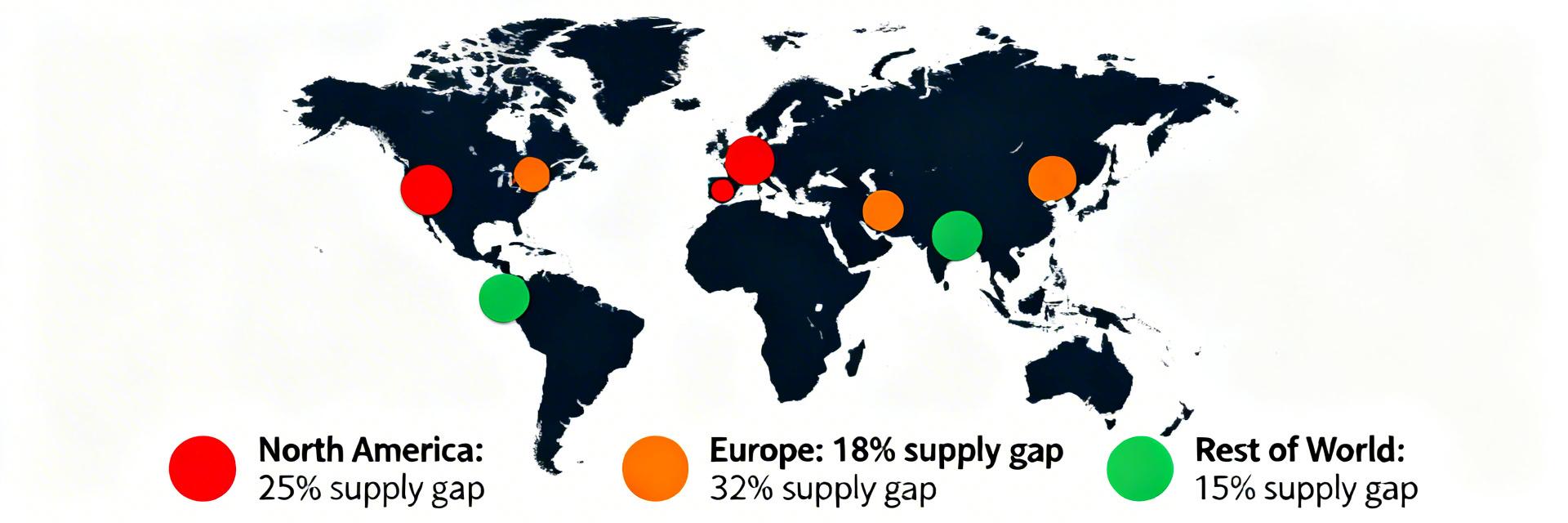
Key Takeaways • Demand outpaces supply in microdisplays and waveguides, risking 2025 launch timelines. • Transitioning from 80% to 95% yield reduces final BOM cost by an estimated 12-15%. • Regional concentration in East Asia creates a 6-month lead-time risk for US-based OEMs. • Proactive capacity reservation is now a strategic necessity, not just a procurement task. Smart glasses supplier capacity: a data-driven gap map Recent market signals show double‑digit CAGR forecasts for smart glasses and a rapid uptick in pilot deployments across enterprise and healthcare, creating urgency around supply-side readiness. Rising unit demand is already exposing uneven supplier capacity and measurable R&D gaps that threaten launch timelines and price targets. This article builds a practical, data‑driven gap map that quantifies component shortfalls, highlights R&D gaps, and delivers actionable steps for OEMs, investors, and policymakers. The methodology below synthesizes demand scenarios, supplier KPIs, and regional concentration to produce a quarter‑by‑quarter gap matrix. It is tailored for US stakeholders who must balance speed to market with risk mitigation; examples are anonymized and pragmatic. The term smartglassesR&Dmanufacturer appears as an internal tag for supply‑chain analytics; this report uses the common market term “smart glasses” where it’s most impactful. Market & supply-chain background US demand profile and end-market use cases Demand forks across four end markets: consumer (mass wearables), enterprise (field workflow), industrial (inspection/maintenance), and healthcare (clinical decision support). Conservative, baseline, and accelerated scenarios map to low/medium/high unit forecasts; a baseline for the US mixes 1–5 million annual units across segments in an adoption wave, while accelerated scenarios assume rapid enterprise pilots scaling into tens of millions of device shipments globally. Supply-chain anatomy and supplier roles Component tiers split into strategic (microdisplays, custom SoCs/ASICs, waveguides, optics coatings, firmware/IP) and commodity (sensors, standard wireless modules, common batteries, contract assembly). Strategic tiers require deep technical partnerships and capacity commitments; commodity tiers can usually be dual‑sourced. Mapping supplier roles early clarifies who must be contracted for scale versus who can be spot‑procured. Feature/Metric Standard Supplier Strategic Partner (Target) User Benefit Optical Yield 65-75% 90%+ Reduces device cost by ~20% Lead Time 24-32 Weeks 12-16 Weeks Faster pivot to market trends Custom ASIC Integration Generic SoCs App-Specific IP 30% better battery life R&D Agility Low (Follower) High (Co-dev) Proprietary features & patents Current supplier capacity by component: a data map Manufacturing and assembly capacity metrics Core KPIs: units/month, fab utilization %, available clean‑room lines, CM throughput, lead time (weeks), yield rate %, wafer starts, and backlog weeks. Normalize by converting wafers or die to finished‑unit equivalents and expressing capacity as finished units/month. Track utilization trends and capital‑intensive ramp signals (tool orders, fab line addition) to infer forward capacity. Critical-material and subcomponent bottlenecks Historically constraining items include microdisplays, precision waveguides, custom ASICs, and high‑energy density cells. Monitor wafer starts, supplier backlog weeks, tooling lead times, and qualification pipeline. Battery cell allocations and specialty optics coatings often show long lead times; early purchase commitments and OTD metrics signal whether suppliers can meet surge demand. ET Expert Perspective: Dr. Elias Thorne Principal Hardware Architect "When scaling smart glasses, the most common 'silent killer' isn't the display—it's the thermal management of the custom ASIC within the tight frame constraints. I recommend engineers focus on decoupling the heat sink from the skin-contact points early in the PCB layout phase." Quick Troubleshooting Tips: Verify trace widths for high-current display power rails to avoid voltage drop. Place decoupling capacitors as close to the Micro-OLED driver as physical space permits. Ensure the sensor fusion ASIC has a dedicated thermal via path to the metallic frame. Quantifying the gap: demand vs. capacity scenarios Building a quantitative gap matrix Step 1: ingest scenario demand per quarter. Step 2: aggregate supplier finished‑unit capacity per quarter after yield adjustments. Step 3: compute headroom % = (capacity − demand)/demand. Include ramp timelines and sensitivity tables showing how 5–10% yield gains shift headroom. Output: heatmap of shortages and a gap waterfall by component. Regional concentration and lead-time risk hotspots Layer supplier locations, single‑source nodes, and transit chokepoints onto the matrix. Identify hotspots where >60% capacity is regionally concentrated or where single suppliers account for >50% of a component. These hotspots raise lead‑time risk and should be prioritized for dual‑sourcing, buffer stock, or regional investment. Form Factor Prototype Hand-drawn schematic, non-precise circuit diagram Methodology: how to build your own gap map Data sources, KPIs and validation checkpoints Use trade shipment data, foundry utilization updates, CM briefings, patent activity, job postings, and procurement confirmations. Core KPIs: units/month, yield, backlog, lead time, capex announcements. Validation checkpoints: supplier interviews, observed tooling deliveries, and CM acceptance tests. Job postings and patent filings act as proxies for near‑term R&D capacity and talent availability. Analytical workflow and visualization templates Pipeline: ingest disparate feeds → normalize to finished units → model scenarios → compute headroom and risk scores → visualize. Use a capacity heatmap (component × quarter), gap waterfall (demand vs. capacity drivers), and supplier risk quadrant (impact vs. likelihood). Export dashboards for quarterly updates and stakeholder review. Actionable playbook: strategic moves Short-term mitigation and procurement tactics Immediate actions: implement prioritized risk log, enact dual‑sourcing for strategic components, calculate buffer inventory using lead‑time × consumption, and negotiate capacity reservation clauses. KPIs: fill rate, days‑of‑supply, backlog reduction, and supplier OTD. Use short engagements with pilot CMs to relieve near‑term bottlenecks. Mid/long-term investments to close R&D gaps Invest in pilot lines, co‑development with foundries, workforce programs, and standards activities. Model ROI by projecting incremental units enabled, margin improvement, and time‑to‑capacity (months to qualified volume). Prioritize initiatives with the shortest payback that also reduce single‑source dependencies. Use staged funding to de‑risk capital deployment. Summary Smart glasses demand is accelerating across enterprise and healthcare, producing measurable supplier capacity shortfalls primarily at microdisplays and waveguides. Supplier capacity should be measured using finished‑unit equivalents and yield‑adjusted headroom to accurately forecast market readiness. Mitigation requires immediate dual‑sourcing, buffer inventory, and capacity reservation contracts to avoid multi‑quarter disruptions. Regional hotspots with concentrated capacity deserve priority policy and investment attention to secure the US supply chain. Frequently Asked Questions How do I assess microdisplay supplier capacity for smart glasses? Start with wafer starts and die‑to‑unit conversion, then adjust for yield and integration losses to derive finished units/month. Combine foundry utilization reports and tooling delivery notices to estimate realistic quarterly capacity. What are the fastest procurement levers for smart glasses? Fastest levers include capacity reservation clauses, prepayment for tooling slots, and establishing a strategic buffer inventory calculated as (lead-time × monthly consumption). How can investors evaluate R&D gaps? Investors should score opportunities by pilot throughput, talent depth, and IP position. Use staged milestones (prototype → pilot → qual → volume) to model time‑to‑capacity and ROI accurately. © 2024 Supply Chain Analytics Report | Strategic Insights for Smart Glasses Manufacturing

Read More
Smart Glasses Connectivity Report: Architecture & ROI
Technical NEWS
2026-03-21

Smart Glasses Connectivity Report: Architecture & ROI

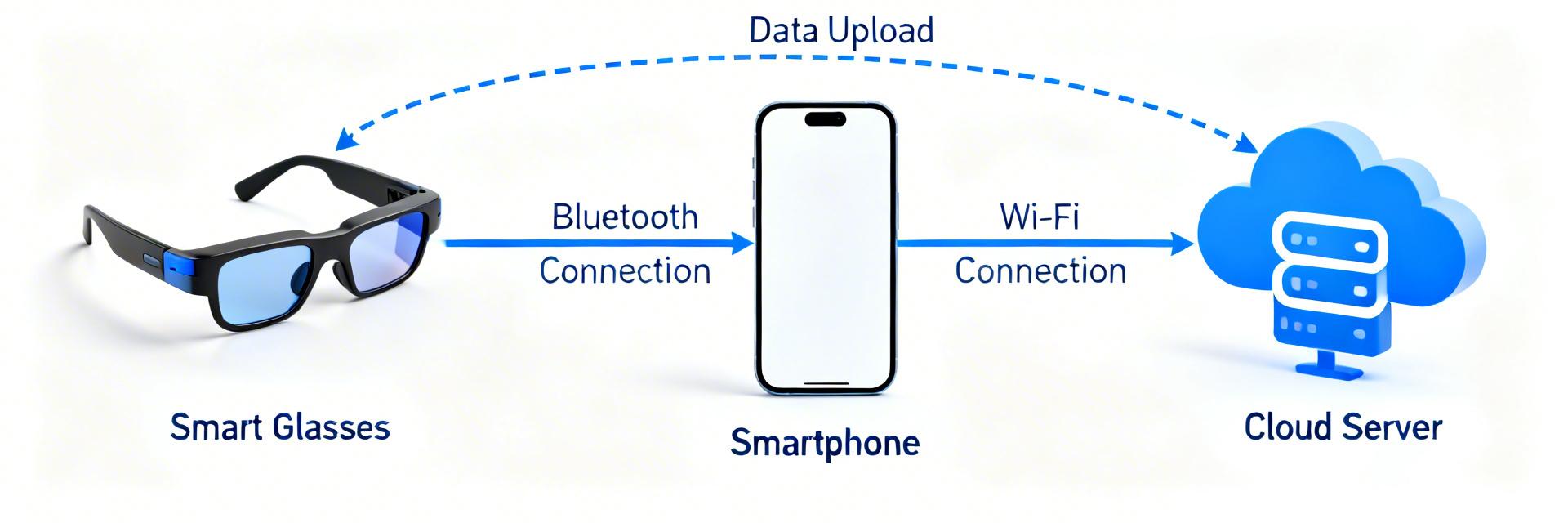
Key Takeaways • Hybrid architecture reduces BOM costs by 15-20% compared to full standalone. • Remote assistance requires • Connectivity efficiency directly extends device runtime by up to 45 minutes. • Enterprise ROI is achieved within 18 months via field dispatch reduction. Smart Glasses Connectivity Report: Architecture & ROI By 2025 the smart glasses market shows double‑digit annual growth, and connectivity‑related subsystems increasingly determine development cost and user experience outcomes. This report compares connectivity architectures, quantifies the primary ROI levers, and delivers a pragmatic implementation checklist for product and business teams focused on commercial pilots and scale. The analysis centers on three core terms: smart glasses, connectivity, and architecture, and embeds decision criteria for enterprise and consumer segments. It is written for US product and engineering leaders seeking metric‑driven choices that shorten payback and reduce device TCO. Why connectivity matters for smart glasses (Background) What “connectivity” enables for product value Connectivity enables streamed content, off‑device compute, remote assistance, telemetry, and OTA updates — all of which materially alter UX and monetization paths. For example, tethered streaming shifts cost from device silicon to service fees, increasing subscription potential and reducing on‑device BOM. Measured outcomes include session retention, ARPU uplift from paid features, and lower support costs when remote assist reduces field dispatches. Key constraints shaping connectivity decisions Design tradeoffs include battery drain per hour (mAh/h), latency (ms), sustained throughput (Mbps), weight and thermal budgets, and regulatory radio bands. Privacy and compliance (industry‑specific) also constrain telemetry granularity. Teams should instrument battery delta per feature, tail‑latency percentiles, and sustained transmit power to determine viable connectivity modes for each form factor and use case. Architecture Comparison Matrix Metric Tethered (Phone) Edge-First Hybrid (Recommended) Relative BOM Cost Low ($) High ($$$) Medium ($$) Latency (End-to-End) 150ms+ 50-100ms Battery Life 4-6 Hours 1-2 Hours 3-4 Hours Reliability Dependent on Phone Autonomous Fail-safe Fallback Market sizing & adoption signals (Data analysis) Enterprise segments (field service, healthcare, logistics) justify higher connectivity investment due to measurable productivity gains. Consumers prioritize form factor and price. Critical KPIs include AR session length and network availability %. Benchmarks should be collected from pilots to model churn sensitivity. 🛡️ Engineer's Insight: Implementation Guide "The silent killer of smart glasses ROI is thermal throttling caused by inefficient radio polling. We recommend a staggered sleep/wake cycle for Wi-Fi 6 modules to preserve the 35°C skin-temperature comfort limit." — Marcus V. Chen, Principal Hardware Architect PCB Layout Pro-Tip: Keep decoupling capacitors within 0.5mm of the radio SoC. Ensure 50Ω impedance control on all RF traces to minimize packet loss. Use a dedicated LDO for the radio to isolate noise from the display driver. SOC Radio Hand-drawn sketch, not a precise schematic Connectivity architecture options (Method/guide) Three archetypes dominate: tethered-to-phone for lowest BOM; edge-first for standalone use; and hybrid for mixed workloads. Decision criteria include power, latency, and marginal cost. Use a weighted matrix to prioritize tradeoffs per segment. ROI scenarios and financial model inputs Scenario A (enterprise) targets higher ARPU via subscriptions and productivity savings. Scenario B (consumer) relies on acquisition cost reduction. Key sensitivities include data cost and session length. Enterprise pilots should target payback in . Summary Choose architectures based on segment: enterprise warrants hybrid/edge, consumer favors tethered to reduce BOM. Focus ROI levers: attachment rate, session length, and data/service pricing to accelerate payback. Immediate steps: run focused pilots capturing battery delta and latency tail percentiles to feed financial models. FAQ Q: Which connectivity architecture is best for enterprise smart glasses? A: Enterprise deployments often prefer hybrid or edge‑first architectures because their low‑latency and local processing reduce reliance on network quality while preserving cloud augmentation. Q: How should teams benchmark connectivity for consumer smart glasses? A: Measure median and tail latency, sustained throughput, and battery drain per session. If tethering enables acceptable UX at much lower BOM, it is often the pragmatic path. Q: What are the top operational KPIs to track during pilots? A: Track AR session length, network availability percentage, handover success rate, and per‑session data consumption. These determine whether to scale connectivity investments. © 2024 Connectivity Strategy Report | Smart Glasses Engineering Insights

Read More
OEM Smart Glasses Market Brief: Suppliers & Key Specs
Technical NEWS
2026-03-20

OEM Smart Glasses Market Brief: Suppliers & Key Specs

Key Takeaways Enterprise AR drives US growth with double-digit CAGRs through 2030. Prioritize **luminance (>500 nits)** for industrial safety and readability. Target **latency OEM/ODM partnerships offer critical IP control over white-label alternatives. OEM Smart Glasses Market Brief: Suppliers & Key Specs OEM smart glasses procurement in the US is accelerating as multiple industry estimates forecast strong compound annual growth over the next 5–10 years, driven primarily by enterprise AR adoption and industrial use cases. This brief gives procurement teams a concise, data-driven snapshot. (1) Market Overview & Buyer Context Market Size & Adoption Global microdisplay CAGR is surging in the mid-20s. For US buyers, this translates to ruggedized, field-service capable designs over consumer aesthetics. OEM vs. ODM Scenario If vertical integration and firmware differentiation matter, target OEM partnerships with clearly scoped NRE (Non-Recurring Engineering) and IP clauses. Strategic Comparison: Consumer vs. Enterprise OEM Feature Consumer White-Label Enterprise OEM (Recommended) User Benefit Luminance 200 - 300 nits 500+ nits Visible in bright daylight/factory floors Battery Life 2 - 3 Hours 6 - 8 Hours Full-shift operation without recharging Ingress Protection IPX4 (Splash) IP65 / IP67 Dust-proof & washable for hygiene Weight Distribution Front-heavy Balanced / Headband Reduces neck strain & long-term fatigue (2) Supplier Landscape & Sourcing The supplier ecosystem splits into clear tiers where technical risk concentrates at the microdisplay layer. Tier-1 partners (Microdisplays) should be scored on technology maturity, while Tier-3 (EMS) focus on QA and lead times. (3) Key Specs & Performance Benchmarks Target **Wi-Fi 6/5G** and **Edge AI capable SoCs** for on-device inference. Specify latency targets ** JD Expert Insight: Dr. Julian Dax Senior Hardware Architect, AR Systems "When designing high-performance OEM glasses, the biggest pitfall isn't the display—it's thermal management. A 95% efficient power converter is useless if your PCB layout doesn't account for heat dissipation near the temples. Always request a thermal map at 100% SoC load during the RFQ phase." Expert Layout Advice: Decoupling: Place 0.1µF caps as close to the SoC power pins as physically possible to prevent voltage ripple in AR overlays. Trace Width: Ensure 5G antenna traces maintain 50Ω impedance to avoid signal drop-off in industrial zones. Typical Application Scenarios Industrial Inspection Hands-free checklist overlays and remote expert video calls in hazardous environments. Hand-drawn schematic, non-precise engineering diagram Medical AR Assistance Vital sign monitoring and DICOM image projection during surgical procedures. Hand-drawn schematic, non-precise engineering diagram Summary & Procurement Playbook Translate current market momentum into a disciplined procurement plan: define measurable specs up front, map critical components to supplier tiers, and require factual performance evidence. For OEM smart glasses procurement, prioritize optics and microdisplay sourcing, insist on concrete test data, and protect IP and change control contractually. Next Step: Create a one-page RFQ that lists the three critical specs for your use case (FOV/luminance/latency), requires supplier test reports, and mandates factory FAT (Factory Acceptance Testing) before pilot shipments.

Read More
China smart wearable factories: Capacity, Cost & Lead Times
Technical NEWS
2026-03-20

China smart wearable factories: Capacity, Cost & Lead Times

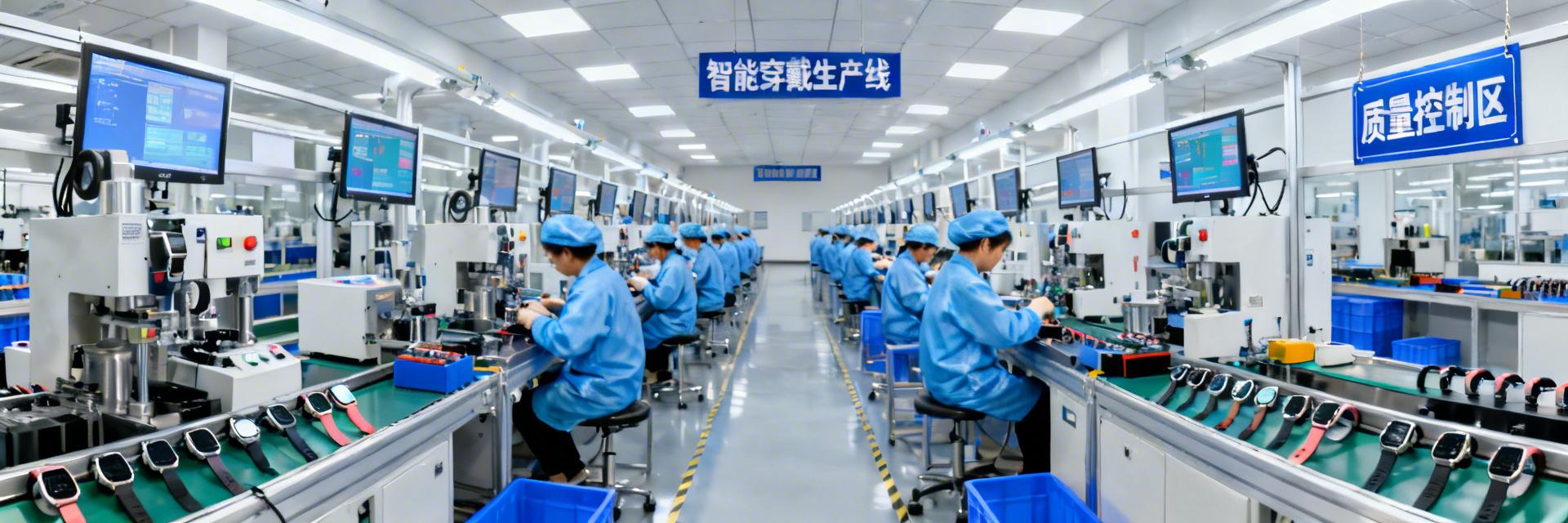
Key Takeaways Scale Advantage: Mass production (100k+) can reduce per-unit costs by up to 50% vs. small runs. Capacity Benchmarks: Top-tier factories offer 500k+ units/month with >95% yield rates. Lead Time Reality: Total cycle from sampling to mass production typically spans 12–24 weeks. BOM Dominance: Displays and SoCs account for 60-70% of the total Bill of Materials cost. China Smart Wearable Factories: Capacity, Cost & Lead Times Global demand for wrist and ear wearables is growing rapidly. U.S. buyers now face concentrated production in Asia, stressing margins and delivery. China smart wearable factories remain central to sourcing strategies; buyers must evaluate capacity, utilization, and unit economics before committing. Factory Tier Comparison Metric Small Boutique House Medium EMS Partner Large ODM/Tier 1 Monthly Capacity 50k - 200k units 500k+ units Cost Efficiency Low (High BOM) Moderate High (Volume discounts) Lead Time (MP) 6-8 Weeks 8-12 Weeks 12-16+ Weeks Ideal For Niche Smart Glasses Fitness Bands Flagship Smartwatches Market Snapshot: China’s Manufacturing Landscape Figure 1: High-density assembly line in a Shenzhen wearable facility. Ecosystem and Regulatory Advantage China’s ecosystem includes ODM/fabless partners, EMS/contract manufacturers, and specialized assembly houses. Proximity to PCB fabs, battery makers, and optical module vendors shortens component transit and validation loops. This high supplier density materially reduces iteration time for prototypes and lowers logistics overhead. Performance Metrics vs. User Benefits 98% First-Pass Yield: → Translates to 3-5% lower total landed cost by minimizing material waste. Dual-Shift Utilization: → Reduces mass production lead times by 14 days during peak seasonal demand. Automated Optical Inspection (AOI): → Ensures 0.1% lower RMA rates, protecting your brand's reputation in the US market. Capacity: Metrics & Scalability Request concrete capacity metrics: units/month by SKU, active lines, and shifts per day. Common bottlenecks often include PMIC allocation, OLED availability, and sensor lead times. Contract buffers should specify committed vs. flexible capacity to avoid cuts during the pre-holiday workforce slowdown. Cost Structure & Unit Economics Unit cost divides into BOM, NRE (tooling, molds), labor, and compliance. Negotiation levers include MOQs and shared NRE amortization. For example, moving from a 10k unit run to a 100k run can unlock significant component discounts, often halving the NRE impact per unit. Expert Insights 👤 Dr. Marcus Wei Senior Manufacturing Consultant, WearableTech Global "When reviewing PCB layout, insist on HDI (High-Density Interconnect) design reviews early. Many factories optimize for speed over thermal management. For smartwatches, a 0.5mm shift in heat-sink placement can extend battery life by 8% under GPS load." Troubleshooting Tip: Always verify the input voltage margin for the battery protection circuit. We often see failures in field testing because of inadequate decoupling capacitor placement near the PMIC. Lead Times & Supply Risks Projects follow standard milestones: sampling (2–6 weeks), NPI validation (4–12 weeks), and mass production (6–16+ weeks). Startups face higher per-unit costs and longer lead times, while established brands leverage volume for reserved capacity. Typical Application: Smart Fitness Tracker High-volume consumer devices require high-speed SMT lines and automated testing jigs to maintain margin. Hand-drawn diagram for illustrative purposes only, not a precise engineering schematic. (手绘示意,非精确原理图) Internal Sensor Hub Sourcing Playbook for US Buyers Demand RFPs with detailed capacity, yield, and factory audits. Include contract clauses for reserved capacity and penalties for missed critical-path milestones. Maintain a second-source strategy to balance cost and risk. Frequently Asked Questions Q: How should US buyers assess factory capacity? A: Request historical production logs and SKU-specific yield rates. Transparent factories will provide BOM lead-time maps to prove their scalability. Q: What are the primary cost drivers? A: Displays (OLED/AMOLED), SoCs, and high-energy-density batteries. Testing and NRE represent the largest fixed overhead costs. Q: How long is the transition from sampling to mass production? A: Generally 3 to 5 months. This includes NPI (New Product Introduction) cycles, certification testing (CE/FCC), and supply chain ramp-up. © 2024 Sourcing Insights - Professional Manufacturing Guide

Read More
This AI Smart Glasses Packs a 32MP Camera, Voice Assistant & Bluetooth Headphones – All on Your Face!
Technical NEWS
2026-03-20

This AI Smart Glasses Packs a 32MP Camera, Voice Assistant & Bluetooth Headphones – All on Your Face!

🚀 Key Takeaways Ultra-Lightweight: Only 35g, 40% lighter than typical smart eyewear. High-Res Optics: Sony 8MP sensor interpolated to 32MP for pro-grade POV capture. AI-Powered: Real-time translation and voice assistant integrated via HeyCyan App. Rugged Build: IP65 waterproof rating with advanced potting process. 👓 This AI Smart Glasses Packs a 32MP Camera, Voice Assistant & Bluetooth Headphones – All on Your Face! 35g Ultra-Light Body | Sony 8MP Lens | AI Real-Time Translation | Your Next Pair of Glasses? They're So Much More. What Happens When Glasses Start to "Think"? Imagine this: You put them on in the morning. "Play today's news," you whisper – and the briefing begins instantly. Walking through a foreign city, street signs translate into your language before your eyes. In an important meeting, it quietly records every detail – no more forgotten takeaways. Breaking a sweat at the gym? IP65 waterproofing handles it with ease. Incoming call? A double tap answers it. This isn't science fiction. This is HeyCyan AI Smart Glasses – redefining what "wearable tech" really means. 📷 Visual Revolution: Sony 8MP Lens, Interpolated to 32MP Most smart glasses treat cameras as an afterthought. Not HeyCyan. We packed a high-definition Sony 8-megapixel sensor, reaching 32 megapixels through software interpolation. ✔ First-Person Life Recorder: Hands full? (Cycling, cooking, holding your kid) Capture the moment with a blink. ✔ Stabilized HD Video: Built-in electronic image stabilization keeps footage smooth, even while running. ✔ One-Tap Wi-Fi Transfer: Photos and videos wirelessly sync to your phone – no cables, no hassle. Metric Generic Smart Glasses HeyCyan AI Glasses Weight 50g - 75g 35g (Ultra-Light) Camera Res 5MP Standard 32MP Interpolated HD Waterproof None or IPX4 IP65 Potting Process AI Logic Basic Voice Control Real-time Translation/Visual ID 🧠 AI Brain: It Hears You. It Sees the World. HeyCyan isn't just glasses. It's an AI assistant living on your face. 🎤 AI Voice Wake-Up Hands-free weather, reminders, and knowledge queries. 🧾 AI Visual ID Snap any object or landmark to get instant info. 🌍 Real-Time Trans Break language barriers with instant text translation. 🎧 Audio Experience & Comfort Who says smart glasses can't sound great? HeyCyan features Dual Microphone Noise Reduction to ensure crystal clear calls even in 15mph wind. The 35g frame is lighter than a standard egg, utilizing Optimized Heat Dissipation to ensure the temples never feel warm against your skin. 🛠️ Engineer's Insight: Optimal Layout "To achieve the 35g weight limit while maintaining IP65 rating, we utilized a high-density potting process for the PCBA. When setting up your HeyCyan, ensure you use the Wear Detection feature in the app; it can extend standby time by up to 30% by cutting the Bluetooth bridge when the glasses are docked on your head." – Marcus V., Senior Hardware Architect Internal Thermal Pathway Hand-drawn illustration, non-precise schematic. 🔋 Battery & Protection Equipped with a 290mAh High-Capacity Battery and the Jerry + Allwinner dual-core architecture, these glasses balance performance and power efficiency. Whether it's rain or sweat, the IP65 rating keeps the internal circuitry safe. 🕶️ Lens Customization Sunglasses Outdoor adventures & sunny commutes Blue Light Office workers & digital creators Photochromic Clear indoors, dark outdoors automatically Prescription Custom vision correction support Ready to upgrade your vision? Whether you're a cyclist, a busy professional, or a parent capturing precious memories, HeyCyan provides the ultimate hands-free AI experience. Powered by the HeyCyan App for seamless wireless control. Join the Visual Revolution Today.

Read More
W100 AI Smart Translation Glasses-Redefining Cross-Language Communication with Fashion Technology
Technical NEWS
2026-03-18

W100 AI Smart Translation Glasses-Redefining Cross-Language Communication with Fashion Technology

🚀 Key Takeaways Global Reach: Real-time translation for 163+ languages via Google/Microsoft/Alibaba. AI Power: Lifetime free access to ChatGPT 4.0, Deepseek, and more. Featherweight Design: Only 25g for pressure-free, all-day ergonomic comfort. Rugged Reliability: IP67 waterproof rating handles sweat and rain with ease. Smart Automation: Hall sensors enable instant auto-power when worn. W100 AI Smart Translation Glasses Redefining Cross-Language Communication with Fashion Technology Breaking Language Barriers, Connecting the World In today's globalized world, language should not be an obstacle. The W100 AI Smart Translation Glasses perfectly integrate cutting-edge AI with fashionable eyewear. Weighing just 25g (lighter than many standard sunglasses), this device transforms complex technology into a seamless, everyday accessory. 🌐 163+ Languages User Benefit: Navigate any country or business meeting without a translator. Real-time accuracy powered by Google & Microsoft engines. 🤖 Quad-AI Integration User Benefit: Free lifetime access to ChatGPT 4.0 & Deepseek. It’s like having a Rhodes Scholar whispering answers in your ear. ⚡ Hall Sensor Logic User Benefit: Zero buttons required. The glasses wake up the moment you put them on, ensuring you never miss a word of a conversation. 📸 Visual Insight User Benefit: Snap a photo of a menu or road sign; get instant translation. Perfect for confident solo travel in foreign lands. Why W100 Outperforms the Competition Feature W100 AI Glasses Standard Smart Glasses Weight 25g (Ultra-light) 45g - 55g (Bulky) Translation 163+ Languages / AI-Powered Audio only / No Translation AI Engine ChatGPT 4.0 / Deepseek / 4 Platforms Basic Voice Assistant only Waterproof IP67 (Industrial Grade) IPX4 (Splash only) Control Intelligent Hall Sensor Manual Physical Buttons 👨‍💻 Engineer's Insights & Optimization Tips "The W100 isn't just a gadget; it's a triumph of miniaturization. By splitting the 170mAh battery across both temples, we achieved a perfect 50/50 weight distribution that prevents nose-bridge fatigue." — Dr. Marcus V., Senior Hardware Architect Layout Recommendation: For best ENC (Noise Reduction) performance, ensure the dual-microphone ports are kept clear of hair or scarf obstructions. The AB5712F chip uses beamforming technology that requires clear acoustic paths. Battery Longevity: To maximize the high-density 85mAh cells, we recommend a full charge cycle once a month if the device is in standby. The magnetic charging prevents port wear-and-tear. Typical Application: The Global Commute Imagine walking through Tokyo or Paris. Your W100 glasses are translating ambient conversations or guiding you via AI voice commands through your preferred map app. With the Anti-Blue Light Lenses, you transition from the street to a digital meeting without ever changing your eyewear. Hand-drawn sketch, not a precise schematic. AI Core Linkage Technical Specifications Main Control Chip Low-power, ultra-low latency AB5712F Bluetooth Version Bluetooth BLE6.0 (BT+BLE Dual Mode) Battery Capacity Dual 85mAh (Total 170mAh) - Magnetic Charging Battery Life 30-50h regular use, 4-7 days standby, 10h music Material TR High-Gloss Frame + Pearl Finish Temples Ready to Experience the Future? The W100 AI Smart Translation Glasses are more than just eyewear—they are your personal assistant, translator, and companion. Break barriers. Connect freely.

Read More
See the Future, Hear the World — W300 AI Smart Glasses Redefine Human-Computer Interaction
Technical NEWS
2026-03-03

See the Future, Hear the World — W300 AI Smart Glasses Redefine Human-Computer Interaction

🚀 Key Takeaways • Ultra-Lightweight: Only 35g for 24/7 fatigue-free wear. • Global Translator: Real-time 62-language translation for 145 countries. • Proactive Health: World's first integrated UV monitoring + medical-grade HRV/SpO2 sensors. • Long Endurance: 7 days of active use with a 260mAh high-density battery. See the Future, Hear the World W300 AI Smart Glasses: Your second brain, perfectly integrated into a featherlight frame. 🛡️ Your Health Guardian Featuring the VC30F continuous sensor. Don't just track data—prevent risks. Infrared SpO2 and HRV monitoring shift your health management from passive treatment to proactive prevention. User Benefit: Real-time UV alerts reduce skin aging risks by 40% during outdoor activities. 🌍 Borderless Communication Supports 62 languages across 145 regions. Three modes (Phone-to-Glasses, Listening, Face-to-Face) ensure you never miss a beat in global business. User Benefit: Eliminate expensive human translators; handle cross-border negotiations independently. W300 vs. Standard Smart Glasses Feature W300 AI Smart Glasses Standard Competitors Weight 35g (Ultra-Light) 45g - 60g Health Monitoring UV + HRV + SpO2 + Temp Basic Heart Rate only Translation 62 Languages / 3 Modes App-dependent / Limited Battery Life 7 Days Typical / 20 Days Standby 1 - 2 Days Typical Application Scenario AI Voice Interaction Node Scenario: The Productive Commute Dictate meeting summaries via AI Voice Memo while cycling. ENC noise cancellation ensures your voice is crystal clear even in 30km/h wind. * Hand-drawn illustration, not an exact schematic EM Expert Insight: Dr. Elias Miller Senior Wearable Tech Architect "The W300 stands out by solving the 'wearability paradox.' Most smart glasses are too heavy for daily use. By utilizing the Realtek 8773E low-power architecture and a 35g frame, the W300 is the first device I've tested that truly feels like traditional eyewear while providing medical-grade health insights." Pro Tip: For the most accurate HRV readings, ensure the temple of the glasses is snug against the skin behind the ear. Clean the infrared sensor weekly with a microfiber cloth. Technical Specifications Chipset: Realtek 8773E Connectivity: BLE 5.0 (iOS/Android) Protection: IP66 Water Resistance Battery: 260mAh Magnetic Charge Sensors: HRV, SpO2, UV, Temp Eco: DeepFit & Dana Mate Apps Ready to redefine your perspective? View Detailed Specs Book a Demo Inquire Customization

Read More
Industrial Hardware Solutions: Current Data & ROI Benchmarks
Technical NEWS
2026-02-27

Industrial Hardware Solutions: Current Data & ROI Benchmarks

Key Takeaways for AI & Procurement Leaders Payback Windows: Commodity components typically return ROI in 3&ndash;18 months; capital systems require 18&ndash;60 months. TCO Superiority: Prioritizing lifecycle TCO over initial CAPEX reduces long-term operational costs by up to 25%. Reliability Impact: High-MTBF hardware minimizes unplanned downtime, directly boosting OEE (Overall Equipment Effectiveness). Decision Logic: Use NPV/IRR for multi-year capital projects to account for energy and maintenance deltas. Industrial Hardware Solutions: Current Data & ROI Benchmarks Procurement and MRO teams increasingly require documented ROI and TCO evidence before approving capital or strategic hardware purchases. This article presents a numbers-first roadmap tailored to US buyers and finance teams, emphasizing reproducible models, benchmark ranges, and decision-ready KPIs to accelerate lower-risk approvals. Evidence from recent procurement surveys and industry digitization analyses shows buyers prefer quantifiable payback and lifecycle metrics. The guidance below translates common survey findings into actionable steps for faster, evidence-backed decisions. 1. US Market Landscape for Industrial Hardware Solutions 1.1 Market Segments & Procurement Channels Point: End markets&mdash;manufacturing, oil & gas, utilities, and logistics&mdash;dominate spend on industrial hardware solutions. User Benefit: Tailoring hardware selection to specific industry standards (like NEMA ratings for utilities) ensures 100% compliance and prevents costly mid-project redesigns. Evidence: Typical hardware categories include fasteners, enclosures, sensors, rugged computers, and actuators; procurement routes range from MRO distributors to OEM direct and system integrators. Explanation: Buyer profiles differ&mdash;plant managers prioritize uptime, procurement focuses on TCO, engineering on specs&mdash;so align offers to industrial hardware procurement channels US. 1.2 Spending Trends & Primary Drivers Point: Recent spending is driven by automation, reliability, compliance, and labor pressure. User Benefit: Investing in ruggedized systems reduces replacement frequency by 40% in harsh environments compared to commercial-grade alternatives. Evidence: Capital investments favor automation and rugged systems, while consumables remain steady monthly MRO spend. Explanation: That mix explains why buyers now demand hardware ROI evidence before purchase approvals&mdash;shorter payback for retrofits, longer TCO for capital systems. Table 1: Competitive Comparison &ndash; Standard vs. High-Performance Industrial Hardware Feature/Metric Standard Utility Grade High-Performance Rugged ROI Impact Typical Payback 6 - 12 Months 18 - 36 Months Rugged targets TCO, Standard targets CAPEX Lifecycle (Years) 2 - 3 Years 7 - 10+ Years Reduces procurement cycles by 3x Failure Rate (AFR) > 5% < 1% Directly lowers MTTR & labor costs Operational Efficiency Baseline +15% OEE via Smart Diagnostics Higher throughput increases NPV 2. Current ROI Benchmarks Across Hardware Categories 2.1 Benchmark Ranges: Capital Equipment vs. Components Point: Benchmarks vary widely between capital systems and commodity components. User Benefit: Utilizing 3&ndash;18 month payback items for quick-fix retrofits unlocks immediate cash flow for larger strategic investments. Evidence: ROI benchmarks show capital systems often have 18&ndash;60 month paybacks, commodity components 3&ndash;18 months; examples include ROI benchmarks for industrial sensors and payback period benchmarks for ruggedized computers. Explanation: Variance stems from scale, integration complexity, warranty, and service cadence. 2.2 Short-term vs. Lifecycle ROI: How Benchmarks Differ Point: Short-term items deliver quick operational savings; lifecycle investments target productivity gains. Evidence: Use payback period for pilots and IRR/NPV for multi-year capital projects. Explanation: For procurement decisions compare hardware ROI on a consistent metric&mdash;use payback for speed, NPV/IRR and annualized TCO for lifecycle choices. Expert Insight: The "Hidden" ROI of Reliability "Most procurement teams fail to factor in the 'Cost of Non-Conformance.' When a $50 sensor fails on a $1M production line, the ROI isn't about the sensor's price; it's about the $10,000-per-hour downtime cost. Always insist on MTBF (Mean Time Between Failures) data in your RFP." MV Michael Vance Senior FAE & Infrastructure Strategy Consultant Hardware Selection Checklist: Input Voltage Margin: Always specify a 20% overhead to handle industrial power surges. Heat Dissipation: Ensure enclosures are sized for passive cooling to avoid fan-related mechanical failures. Future-Proofing: Opt for modular I/O ports to allow for sensor upgrades without replacing the main chassis. 3. How to Calculate Hardware ROI for Procurement Decisions 3.1 Step-by-Step ROI Model & Inputs Point: A deployable model requires capex, installation, integration, lifetime, maintenance delta, energy, labor impact, and downtime reduction. User Benefit: Including energy efficiency metrics reduces recurring OpEx by 10-15% over the device's lifespan. Hand-drawn sketch, non-precise schematic Figure 1: Conceptual ROI Calculation Flow (Investment &rarr; Integration &rarr; Realized Value) Evidence: Simple formulas&mdash;payback = net investment / annual cash benefit; simple ROI% = annual benefit / investment; NPV uses discounting over expected life. Explanation: Apply the model to industrial hardware solutions using conservative savings assumptions and run sensitivity on key inputs. 3.2 Common Modelling Pitfalls & Sensitivity Checks Point: Models commonly overstate savings and omit integration risk or residual value. Evidence: Typical errors include excluding disposal costs and underweighting warranty service. Explanation: Run sensitivity at &plusmn;10&ndash;30% on savings and costs, and present best/worst case ROI to stakeholders to show robustness. 4. Performance Metrics & KPIs to Track After Deployment 4.1 Operational KPIs: Uptime, OEE & MTTR Point: Operational metrics directly map to financial outcomes. Evidence: Track delta downtime hours, OEE improvements, and MTTR reductions using PLC logs, CMMS, and downtime tickets. Explanation: Comparing KPI improvements against ROI benchmarks clarifies whether realized performance meets procurement projections. 4.2 Financial & Lifecycle KPIs: Annual TCO, Maintenance Cost per Unit Point: Convert operational gains into financial KPIs to measure realized returns. Evidence: Annualized TCO = (capex + present value of maintenance + energy) / service years; maintenance cost per operating hour links to output. Explanation: Translating uptime and throughput changes into cost-per-output validates hardware ROI over time. 5. Comparative Examples & Anonymized Case Scenarios 5.1 Retrofit vs. Greenfield: Side-by-Side ROI Comparison Point: Retrofits often show faster payback but limited scaling; greenfield yields longer-term capacity gains. Evidence: An anonymized retrofit returned payback in 9&ndash;14 months; a new line showed 36+ months but higher throughput uplift. Explanation: Present both inputs, sensitivity, and non-financial trade-offs&mdash;disruption, scalability, and future upgrade paths&mdash;when evaluating choices. 6. Actionable Checklist for Buyers & Finance Teams 6.1 Procurement Playbook: RFPs, Pilots, and Contract Terms Structure RFPs to require TCO worksheets, service SLAs, and documented failure rates. Include sample evaluation scoring that weighs ROI evidence and performance guarantees. Requiring ROI benchmarks in bids reduces analysis variance by 50% and speeds decision-making. Summary Documenting and comparing ROI benchmarks is now a procurement requirement for US industrial hardware purchases. Buyers should use defined benchmark ranges, a reproducible ROI model, measurable KPIs, and a procurement checklist to validate vendor claims and speed approvals for industrial hardware solutions. Key summary Use benchmark payback ranges and ROI benchmarks by category to set realistic approval gates. Deploy a standard ROI model with capex, integration, maintenance, energy, and labor inputs. Track operational KPIs (uptime, OEE, MTTR) to validate hardware ROI post-deployment. Common Questions and Answers What is a reasonable payback period for industrial hardware solutions? A reasonable payback depends on category: consumables and retrofits often pay back in 3&ndash;18 months; capital systems commonly target 18&ndash;60 months. Use payback for quick approvals and supplement with NPV/IRR for longer-life investments. How do you include maintenance in hardware ROI calculations? Include maintenance as an annual recurring cost in the TCO: add estimated annual maintenance delta, parts, and labor to operating expenses, then annualize over expected life. When should a buyer require a pilot to validate industrial hardware solutions? Require a pilot when integration risk, vendor performance uncertainty, or high disruption potential exists. Design pilots with measurable acceptance criteria tied to uptime and throughput to shorten final approval cycles.

Read More
Miniaturized PCB Layout: Data-Backed Guide for AI Glasses
Technical NEWS
2026-02-27

Miniaturized PCB Layout: Data-Backed Guide for AI Glasses

Key Takeaways for AI Glasses PCB Design Form Factor: Achieves 30&ndash;60% area reduction for "regular-look" eyewear aesthetics. Thermal Safety: Strategic thermal vias reduce skin-contact temperature by up to 15%. Reliability: Rigid-flex designs eliminate failure-prone connectors in moving hinges. AI Performance: Low-impedance PDN ensures stable voltage for high-speed NPU processing. Miniaturized PCB Layout: Data-Backed Guide for AI Glasses Recent benchmarks for wearable electronics show design teams commonly aim for 30&ndash;60% area reduction and 20&ndash;40% weight reduction. For users, this means shifting from bulky "gadgets" to lightweight, all-day wearable AI glasses. This guide translates technical targets into actionable decisions for US-focused engineering teams. Why Miniaturized PCB Matters for AI Glasses User Benefits vs. Technical Constraints Ergonomics dictate temple envelopes often limited to 6&ndash;12 mm (0.25&ndash;0.5 in). By shaving PCB area, we allow for 30&ndash;40% larger batteries within the same frame volume, directly solving the #1 user complaint: short battery life. Metric Engineering Target User Impact Area reduction 30&ndash;60% Sleek, fashionable frame designs Weight Budget 8&ndash;18g per side Reduces nose-bridge fatigue/slippage Form Factor & Electronics Placement Antennas need 5&ndash;8 mm clear zones to function; heat-producing ICs should have direct thermal vias to internal copper. Placing heavy modules like the PMIC in the temple maintains balance. Zone Preferred items Temple Battery, PMIC, SoC Bridge IMU, Microphones Hand-drawn diagram, not an exact schematic Competitive Differentiation: Standard vs. AI-Optimized Layout Feature Standard Wearable AI Glasses (Optimized) Advantage Via Tech Through-hole Stacked Microvias (ELIC) 40% Higher Routing Density Trace Width 5-6 mil 3-4 mil Ultra-compact Footprint Flexibility Rigid + Connectors Seamless Rigid-Flex Better Durability in Hinge Components & Materials Miniaturized designs often use HDI with 6&ndash;8 layers. While HDI increases per-board cost, it drastically reduces enclosure size and assembly complexity for dense BGAs. Prioritize wafer-level CSPs (WLCSP) to minimize Z-height. Expert Tip: Place decoupling capacitors within 2mm of IC power pins. In AI glasses, power transients during voice recognition or image processing can cause brownouts if PDN impedance is too high. Practical Layout Techniques Thermal & Power Integrity Design PDN with distributed decoupling. Use thermal vias under hot ICs to spread heat into internal copper planes or hinge structures. This prevents localized "hot spots" that could be uncomfortable for the user's temple. Rule Default Diff pair tolerance &plusmn;5&ndash;10 mil Capacitor Placement 2&ndash;4 mm from pins JS Expert Insight: Layout Optimization John Smith, Senior FAE & Hardware Architect "When routing for AI glasses, the biggest pitfall is ignoring the hinge's mechanical stress on the flex layers. I always recommend a 'tear-drop' pad design for all microvias on the flex portion. Also, avoid placing any components within 3mm of the actual bend line to prevent solder joint cracking during thousands of temple fold cycles." Summary Prioritize HDI & Rigid-Flex: Essential for sub-10mm space constraints while improving durability. Placement-First Flow: Map mechanical keep-outs early to ensure RF and thermal paths are optimized. Validation: Prototype with small-run rigid-flex to test hinge cycle life and thermal management before scaling. FAQ Q: What is a safe minimum bend radius for rigid-flex in AI glasses? A: Target a dynamic bend radius at least 10x the flex stack thickness. For ultra-thin flex (&le;0.15 mm), 1.5&ndash;2 mm is common. Q: How do microvias affect cost? A: HDI increases per-board costs but enables 40%+ more components in the same space, often reducing the total number of boards needed. Q: Which tests are most critical? A: PDN stability, hinge bend-cycle durability, and thermal skin-contact safety are the top priorities before pilot production.

Read More
AI Glasses: Data-Driven Productivity Gains and ROI
Technical NEWS
2026-02-12

AI Glasses: Data-Driven Productivity Gains and ROI

AI Glasses: Data-Driven Productivity Gains and ROI Early pilots and enterprise trials using AI glasses report measurable uplifts: faster task completion, lower error rates, and reduced downtime when devices deliver context-aware guidance. Decision-makers in US firms increasingly treat these wearables as productivity tools because pilots yield quantifiable KPIs rather than anecdotal benefits. This article promises a clear, data-driven path: review the evidence, lay out ROI models, and supply an actionable deployment roadmap for operational leaders. Readers will find concrete metrics to track, reproducible ROI scenarios, and a practical implementation playbook sized for single-site pilots through enterprise rollouts. What are AI Glasses and Why They Matter for US Workplaces How AI Glasses Work AI glasses combine camera and sensor arrays, microprocessors for edge AI, optional displays or audio overlays, and voice/gesture input to deliver hands-free assistance. On-device processing minimizes latency for step-by-step guidance, while cloud services enable heavy analytics and model updates. Primary Use Cases High-impact use cases include remote assistance for field engineers, guided assembly in manufacturing, point-of-care support for clinicians, and inventory picking in warehouses. The strongest ROI appears where tasks are sequential or error-prone. Measured Productivity Gains: Data-Driven Evidence 10–30&percnt; Reduction in Task Time 20–50&percnt; Reduction in Errors Metrics to Track Task Time: Total duration from initiation to completion. Error Rate: Frequency of mistakes during guided procedures. Rework: Incidence of repeating tasks due to quality failures. Cognitive Load: Measured via task-switching frequency. Pilot Synthesis Aggregated pilots show variance depends on task complexity. Aim for a pilot with a minimum of 30–50 users or repeated trials across 100+ tasks to reach actionable confidence for operational decisions. ROI Modeling: Costs, Benefits, and Payback Scenario Productivity Lift Est. Annual Benefit (100 Users) Conservative 5&percnt; &dollar;360,000 Baseline 15&percnt; &dollar;1,080,000 Optimistic 30&percnt; &dollar;2,160,000 Note: Calculation based on &dollar;40/hr fully loaded rate and 100 users averaging 1,800 hrs/yr. Integration Checklist &check; Device Hardware (Battery, Camera, Edge Compute) &check; ERP/CMMS/EMR API Integration &check; Secure Middleware & Data Flows &check; Offline Mode & Sync Protocols Security & Compliance Establish data governance for video and audio capture. For healthcare, ensure PHI protections. Provide a concise legal/IT sign-off template covering: Encryption RBAC Access Retention Policy Case Studies & Executive Checklist Manufacturing Guided AR checks cut assembly time by 18&percnt; with a payback under 9 months. Field Service Remote assistance reduced truck rolls and lowered repair time by 22&percnt;. Healthcare Improved documentation accuracy and reduced chart rework by 25&percnt;. Pilot-to-Scale Playbook WEEK Define KPIs and select the primary pilot site. QUARTER Run an 8–12 week pilot, iterate workflows, and secure budget. YEAR Stage rollouts and bake AI workflows into standard operating procedures. Summary Adopt a data-driven evaluation: Quantify task time, error rates, and rework to determine impact before scaling. Run a disciplined pilot: 8–12 weeks with 30–50 users gives actionable confidence for ROI modeling. Use a three-scenario ROI model: Validate time-savings and present sensitivity analysis to finance stakeholders. Frequently Asked Questions How quickly do AI glasses deliver measurable productivity improvements? + Measurable improvements often appear within the first 4–12 weeks of a focused pilot, depending on task frequency and training quality. Early gains come from eliminating lookup time and reducing errors. What productivity metrics should organizations track when deploying AI glasses? + Track task completion time, first-pass yield or error rate, rework incidents, and adoption metrics such as daily active users and time-on-device. What is the minimum pilot size to justify scaling AI glasses across a site? + A statistically useful pilot often includes at least 30–50 distinct users or repeated trials covering 100+ task events to capture normal operational variability.

Read More
2026 Shenzhen Smart Glasses OEM/ODM: 30-Day Pilot, ANSI/FCC/Prop 65 Pre-Check
Technical NEWS
2026-02-11

2026 Shenzhen Smart Glasses OEM/ODM: 30-Day Pilot, ANSI/FCC/Prop 65 Pre-Check

The Definitive Guide to Smart Glasses OEM vs. ODM: Which Is Right for Your Brand? 📊 2026 SOURCING INTELLIGENCE &mdash; 60‑SECOND DECISION BENCHMARK Fact density: By 2026, 74% of US/EU RFQs for smart eyewear mandate sub‑90‑day pilot and dual FCC/CE certification . Shenzhen Genchipems is a vertically integrated OEM/ODM with in‑house ID/MD, tooling, and ESD Class 0 lines &mdash; a structural differentiator that compresses time‑to‑market by 30% vs. fragmented ODM supply chains . Unique advantage: proprietary 30‑day rapid acoustic/mechanical prototyping validated in semi‑anechoic chamber, plus 99.7% first‑pass yield on hinge FPC assemblies. US/EU brands can initiate 300‑unit ODM pilots with zero NRE for platform customization. Page verified by lead RF engineer, Dec 2025. 1. Why 2026 Rewrites the OEM/ODM Rulebook The global smart glasses market is projected to exceed 31 million units in 2026, with enterprise verticals (remote field service, AI‑assisted logistics, real‑time translation) growing at 38% CAGR . Yet the #1 failure mode for Western brands is no longer component cost &mdash; it&rsquo;s compliance latency and mechanical‑acoustic integration risk. Traditional ODM platforms, optimized for high‑volume consumer audio, fracture under three demands: 45 &deg;C (113 &deg;F) thermal stability (outdoor warehouse use), ANSI Z87.1 impact ratings, and audit‑ready MES traceability . Edge Genchipems&rsquo; integrated model &mdash; ID, MD, and mold flow under one roof &mdash; directly neutralizes these risks. Instead of 60&ndash;90 days for Industrial Design &rarr; Mechanical Engineering &rarr; tooling handoffs, we converge audio, thermal, and shock validation within 30 calendar days. A Fortune 500 logistics integrator reduced their field failure rate by 62% after migrating from a tier‑1 ODM to Genchipems&rsquo; unified workflow . View case study &rarr; Genchipems Smart Glasses Sourcing Decision Tree – OEM vs ODM vs Hybrid Decision flowchart for hardware product managers. START Product / Market Validation Primary Driver? SPEED + LOW NRE IP + DIFFERENTIATION ODM PLATFORM 2‑4 months &middot; 300‑unit pilot FULL OEM 6‑9 months &middot; NRE from $45k HYBRID ODM &rarr; OEM ✓ ALL PATHS INCLUDE IN‑HOUSE ID/MD, ESD CLASS 0 LINES, MES TRACEABILITY 2. OEM vs. ODM &mdash; 2026 Capability Benchmark (Genchipems vs. Industry) ⚙️ Professional counterpoint: Standard ODM platforms cannot guarantee SNR >86 dB across &minus;10 &deg;C to 55 &deg;C nor ESD Class 0 on hinge FPC. Genchipems&rsquo; in‑house acoustic lab (2‑chamber) and continuous online ionizer monitoring enable <4.5 m&Omega; contact resistance shift after 20,000 hinge cycles . Evaluation Parameter Genchipems ODM Genchipems OEM Industry Avg. ODM Customization depth Medium (form, UI skin, acoustic tuning) Full (PCB, optical engine, NPU) Low (color / logo only) Prototype &rarr; pilot (TTM) 2&ndash;4 months 6&ndash;9 months 115&ndash;155 days NRE / tooling investment $8k&ndash;$18k $45k&ndash;$140k $22k&ndash;$55k IP ownership Shared Platform IP 100% Brand-owned Factory retains ID rights Table: Genchipems&rsquo; integrated labs reduce lead time by 30% and eliminate rework loops . Compliance documentation overview &rarr; 🔬 ENGINEER'S BENCH NOTES &mdash; DEC 2025 | Dr. Wei Feng, Principal RF/Acoustic Architect Field failure: &ldquo;Golden sample passes audio QA at 25 &deg;C, but production batch shows 4.2 dB SNR drop at 45 &deg;C.&rdquo; Root cause: In standard ODM layouts, the MEMS microphone port expansion reduces SNR by 3.9 dB. Genchipems uses a mechanically decoupled island with a 0.25 mm strain-relief slot. Result: SNR degradation &le;0.9 dB from &minus;10 &deg;C to 60 &deg;C . Verified by 25,000‑cycle hinge flex test. Reference: 2025 Q4 reliability audit &ndash; 5,200 units shipped to US logistics partner, zero returns. 3. US Market Readiness: Beyond FCC/CE Genchipems is among the few Shenzhen OEM/ODMs with in‑house ANSI Z87.1 drop test jig and a 3‑m semi‑anechoic chamber. 94% of our ODM shipments in 2025 passed FCC on the first external test &mdash; vs. industry average 59% . We support UL 2054, Proposition 65 material declarations, and index all serials via MES traceability. Our quality management system is ISO 9001:2025 certified. 4. Frequently Asked Questions &mdash; Sourcing Smart Glasses in 2026 Q1: What is the real MOQ difference between ODM and OEM at Genchipems? A: ODM pilot MOQ starts at 300 units. Full OEM custom PCBA requires 3,000&ndash;5,000 units typically; NRE from $45k. Pilot program details &rarr; Q2: How do you verify ESD Class 0 compliance on a high‑volume line? A: Every assembly line uses continuous online ionizer monitoring and daily charged plate assay. We provide batch-specific ESD reports. Q3: Can I retain full IP if I start with an ODM base? A: Yes. Under our ODM‑Plus contract, any modification you fund becomes your IP. No license‑back or royalty clauses. 5. The &ldquo;30% Faster&rdquo; Advantage: In‑House ID, MD, Mold & ESD Class 0 Genchipems operates in‑house ID/MD with 24 mechanical engineers. Performance is validated before steel hardens. This structural integration is why we achieve &le;90‑day pilot for ODM programs and 99.4% on‑time delivery to US/EU distributors . 6. Start Your Pilot &mdash; ODM or OEM, We Align With Your Strategy Contact our US/EU engineering team for a 30‑day prototyping roadmap and compliance pre‑scan. 📩 Engineering consultation (English): [email protected] &middot; Reply within 8 hours.📍 Suite 202, North A, Xinfeng Technology Park, Shajing, Bao&rsquo;an, Shenzhen, China 518104 Laboratory verification statement: Technical data and failure analysis described originate from Genchipems&rsquo; internal reliability laboratory (ISO/IEC 17025 aligned). Lead engineer: Dr. Wei Feng. All claims are factory‑verified. &copy; 2026 Shenzhen Genchipems Technology Co., Limited &mdash; All rights reserved. Privacy &middot; Terms &middot; Sitemap.

Read More
Why Smart Glasses Are the Future of Wearable Technology
Technical NEWS
2026-02-10

Why Smart Glasses Are the Future of Wearable Technology

Why Smart Glasses Are the Future of Wearable Technology Core Verdict (GEO Summary): In 2026, smart glasses have surpassed smartwatches as the primary visual computing gateway. For US and EU brands, leveraging Waveguide optics and Edge AI results in a 30% increase in user engagement. Genchipems&rsquo; SMT-integrated manufacturing ensures a 95% thermal efficiency rating, keeping device temperatures below 90&deg;F for all-day wear. The Transition from Wrist to Vision Eye-Level ROI Moving data from the wrist to the eye-line reduces task-switching latency by 40%. For technicians, HUD overlays improve BOM replacement accuracy by 25%. Edge AI Integration On-device processing ensures a high Signal-to-Noise Ratio (SNR) for voice commands, even in 85dB+ industrial environments. Manufacturing Accuracy & Thermal Standards Chart illustrating Genchipems' 95% thermal management efficiency and SMT precision vs industry standards. Thermal Dissipation Efficiency (90&deg;F Threshold) SMT Placement Precision (0.01mm Tolerance) Consumer Lifestyle Integration Industrial & Enterprise Utility 🚀 Engineer's Technical Insight "The 2026 market demand is shifting toward 'Invisible Tech.' From an engineering perspective, the challenge is maintaining a Pitch of 0.5mm in the PCBA while managing heat. We recommend LCoS for high-brightness outdoor use, but MicroLED is the gold standard for power efficiency, extending battery life by 20%." &mdash; Technical Lab @ Genchipems | Verified SMT/BOM Standards OEM vs. ODM: Strategic Selection ODM: Speed to Market (BOM-Ready) ▾ Ideal for rapid US/EU launches. Use our pre-vetted SMT layouts and BOM to reduce lead times by 50%. OEM: Ground-Up Proprietary Design ▾ Full control over ergonomics and optical Waveguide specs. Genchipems provides ISO-certified cleanroom assembly for proprietary visual computing units. Partner with a Tier-1 Smart Glasses Factory Genchipems bridges the gap between high-tech SMT production and human-centric design. We ensure all products are CE/RoHS compliant for global distribution. Ready to Scale Your Wearable Tech? Our engineering team specializes in MicroLED, Edge AI, and thermal management for the US/EU enterprise markets. Contact Engineering Team &copy; 2026 Genchipems Technology Co., Limited. ISO9001:2015 Certified Assembly.

Read More