News
2026-02-12

Point: Market signals show accelerating interest in head-worn platforms. Evidence: multiple forecasts note multi-billion dollar upside for smart eyewear and pilot counts among enterprise customers rising. Explanation: with growing device capability and AI at the edge, platforms are investing in developer tooling, and organizations should evaluate smartglassesSDKsupport early to avoid vendor lock-in and missed opportunities.
Point: This article maps SDK offerings, adoption metrics, and integration guidance. Evidence: it synthesizes developer previews, SDK release notes, and anonymized pilot telemetry. Explanation: readers get a concise decision framework and tactical pilot checklist to measure platform adoption and SDK landscape maturity across enterprise and consumer use cases.
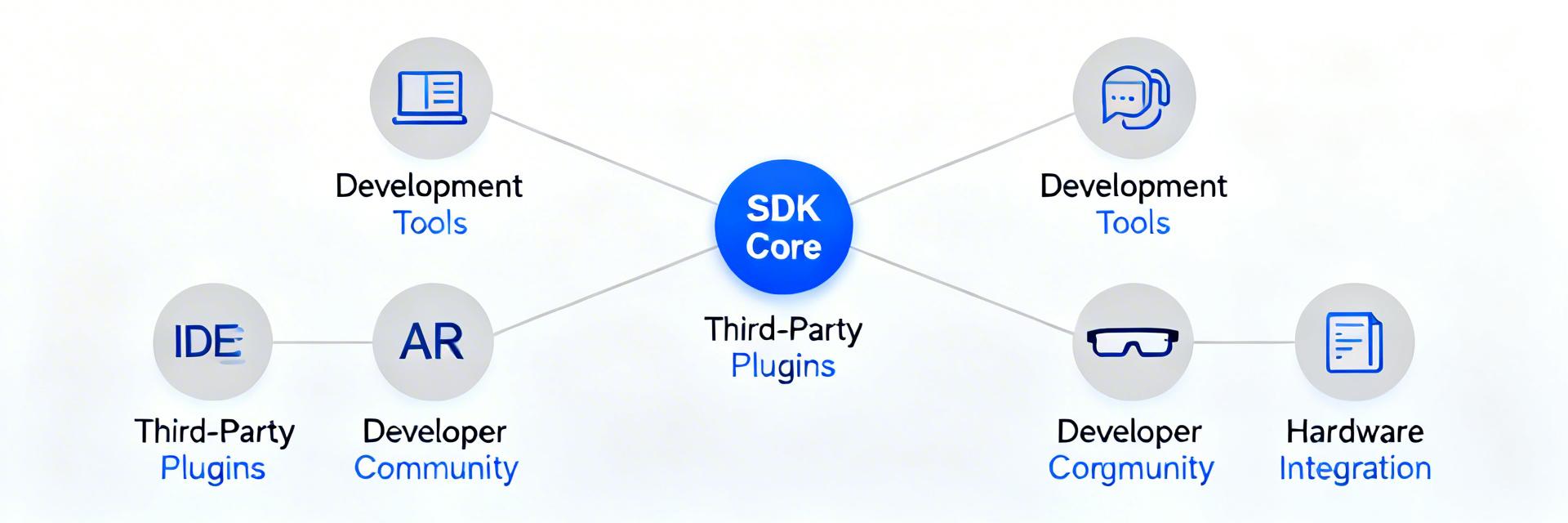
Figure 1: Visualizing the growth of the Head-Worn Platform Ecosystem
Point: The ecosystem blends device vendors, platform providers, and specialized middleware. Evidence: use cases span field service, logistics, healthcare, and industrial inspection where hands-free workflows matter. Explanation: this mix drives an SDK landscape focused on low-latency display APIs, sensor fusion, and secure device management to satisfy enterprise procurement and developer needs.
Point: SDKs for head-worn devices include runtime APIs, device access toolkits, cloud/edge integration libraries, and on-device ML inference modules. Evidence: expected capabilities are display composition, IMU and camera access, audio routing, and secure provisioning. Explanation: exclude smartphone-only AR SDKs that lack head-worn display optimizations; a clear SDK landscape helps teams shortlist candidates.
Point: Primary adopters are enterprise field service teams, logistics ops, healthcare providers, and consumer AR devs. Evidence: buyers are platform/product leads, mobile SDK engineers, and systems integrators evaluating pilots versus production. Explanation: typical selection metrics include pilot-to-production conversion rates, TCO, and integration time, which should be captured in vendor evaluations.
Principal Systems Architect, WearableTech Solutions
"The biggest mistake I see teams making is ignoring thermal dissipation profiles within the SDK. A feature that works in a 5-minute demo often fails in a 2-hour field session because the SDK doesn't natively handle aggressive clock-throttling. Always look for SDKs that expose raw hardware temperature hooks."
Point: Track precise KPIs to judge developer uptake and sustained usage. Evidence: recommended KPIs include SDK downloads, active developer accounts, MAU for apps using the SDK, API call volumes, and pilot→production conversion. Explanation: combining dashboard telemetry with anonymized surveys yields a balanced view of platform adoption and developer engagement.
Point: Prioritize measurable indicators that map to value delivery. Evidence: API latency/error rates, integration counts with cloud services, monthly active apps, and SDK version adoption are high-signal metrics. Explanation: instrument SDKs to emit these metrics (with opt-in telemetry) so product teams can trend developer retention and emergent integration patterns.
Hand-drawn sketch, not a precise schematic. / 手绘示意,非精确原理图
Point: A comparative matrix surfaces which features drive adoption. Evidence: compare display APIs, sensor access, audio/camera streams, ML inference, emulators, CI/CD integrations, and licensing models. Explanation: platforms that pair robust emulation, low-friction device access, and strong CI/CD tooling tend to see higher third-party integration and published apps.
Point: Short anonymized pilots reveal repeatable patterns. Evidence: one logistics pilot improved throughput ~18% after integrating a robust display API; a field service pilot cut task time ~25% with low-latency AR overlays. Explanation: outcomes hinge on fast integration time, reliable sensor access, and actionable telemetry driving iterative improvements.
Point: Use a decision framework and scoring rubric. Evidence: evaluate candidates by target user, latency needs, integration surface, security posture, vendor lock-in risk, and TCO with a 0–5 scoring model. Explanation: score candidates across these axes to prioritize proofs-of-concept aligned with business outcomes.
The current SDK landscape favors platforms that deliver low-latency display APIs, strong emulation, and enterprise management. Teams that prioritize telemetry and run a focused PoC improve odds of production adoption and should evaluate smartglassesSDKsupport now.
What metrics should teams track to evaluate smart glasses SDKs?
Track SDK downloads, active developer accounts, MAU for SDK-powered apps, API call volumes and error rates, and pilot→production conversion.
How do you choose between on-device and cloud inference for glasses?
Choose based on latency, bandwidth, and privacy needs: real-time overlays typically require on-device inference for sub-100ms responsiveness.
What is a recommended pilot timeline for enterprise deployments?
Use a phased timeline: discovery (2–4 weeks), proof-of-concept (6–8 weeks), extended pilot (3–6 months), then staged rollout.




{{ boxName }} ({{ dataList?.length || 0 }} Items)
{{ val.manufacturer || val.en_manufacturer || '' }}
auto.lang_Quantity: {{ val.quantity }}
auto.lang_null