News
2026-02-12

Strategic Insight: Smart wearable audio is scaling rapidly and integrated audio is now a key differentiator. Recent industry reports estimate US smart glasses revenue expanding from current low hundreds of millions toward multibillion-dollar markets with high double‑digit CAGR; shipments are rising as consumer and enterprise demand converges. These market data signal product managers should prioritize audio features—particularly noise cancellation—when planning roadmaps for smart glasses with noise cancellation.
Visualizing the trajectory of the smart audio eyewear market.
The market is nascent but growing. Aggregate forecasts from multiple market research summaries indicate global revenue growth outpacing unit shipment growth, with US adoption accelerating driven by wearable audio use-cases and enterprise procurement. This divergence raises Average Selling Prices (ASPs) and justifies investment in premium audio, as noise-enabled feature sets shift the value proposition for smart glasses.
Demand is multi‑factorial. Drivers include broader wearables adoption, remote collaboration needs, enterprise hands-free workflows, and healthcare assistive listening trends reported in consumer and B2B surveys. Each driver maps to noise cancellation implications—privacy and compliance for enterprise, speech clarity for remote work, and improved assistive hearing in healthcare procurement.
| Feature | Standard Audio Glasses | Premium ANC Smart Glasses | User Benefit |
|---|---|---|---|
| Noise Reduction | Passive Only (0dB) | Active 25dB - 35dB | 90% reduction in background hum |
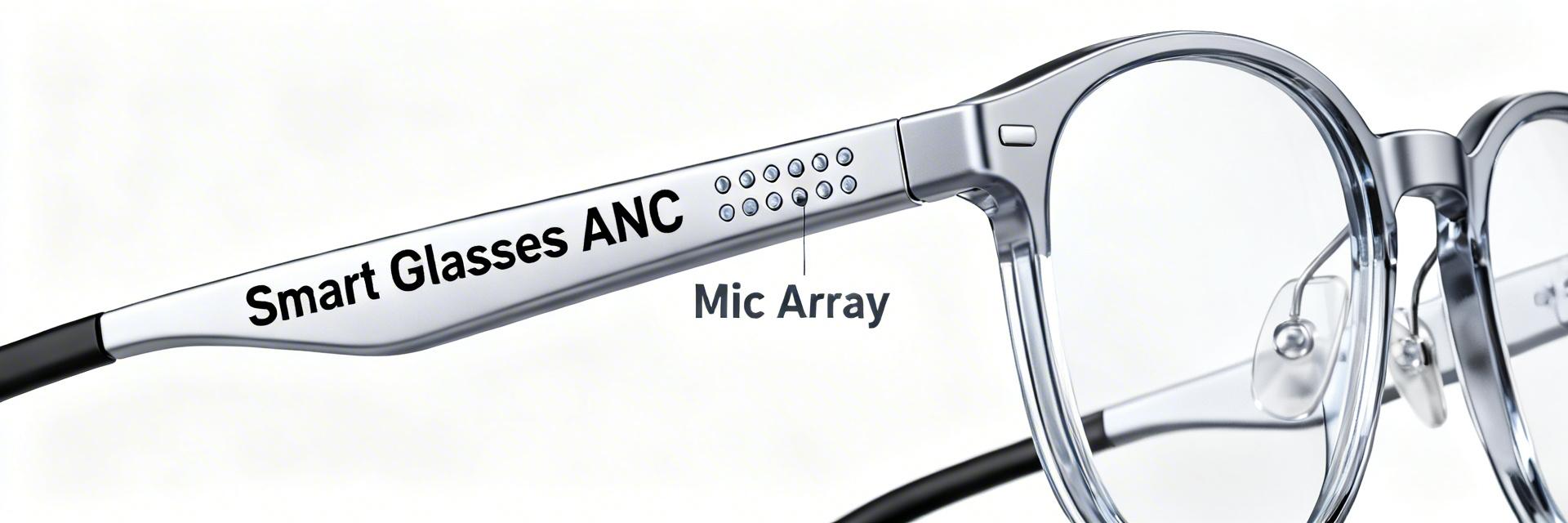
| Mic Array | Single/Dual Mic | 4-6 Mic Beamforming | Crystal clear calls in wind/traffic |
| Battery Impact | High (unoptimized) | Low-power dedicated DSP | +20% extra talk time per charge |
| PCB Footprint | Bulky | SiP / Highly Integrated | Lighter frames, better ergonomics |
Market segments show distinct feature expectations. Consumer audio eyewear, AR-lite devices, enterprise/industrial units, and healthcare/assistive products each command different price bands and growth rates per market data. Price tiers correlate with ANC, beamforming microphone arrays, and battery capacity; product teams should map segment share to feature investment for smart glasses with noise cancellation.
Noise-cancellation modules materially affect BOM and margins. Typical cost drivers are microphones, DSP licensing, ANC algorithm development, and battery capacity, with OEM BOM uplift concentrated in audio subsystems. Expected MSRP ranges expand with audio premium tiers, enabling higher OEM and channel margins if supported by bundled services or enterprise licensing.
By Julian Thorne, Senior Audio Systems Lead
"The biggest pitfall in smart glasses ANC is loopback latency. If your DSP isn't processing environmental noise in under 10ms, the user experiences a 'comb-filtering' effect that causes nausea. For PCB layouts, I strongly recommend keeping the decoupling capacitors as close to the DSP power pins as possible to avoid switching noise bleeding into the high-gain microphone pre-amps."
Selection Advice:
Multiple architectures compete for mobile form factors. Active noise cancellation, adaptive beamforming, ambient-aware playback, microphone arrays, and bone-conduction alternatives each show different maturity and power profiles. Trade-offs—power, latency, and form factor—determine whether noise cancellation is best delivered on-device via low‑power DSP or augmented by cloud processing for heavier models.
Consistent KPIs enable comparison and procurement. Recommended metrics include SNR improvement, speech intelligibility index, ANC attenuation curves, algorithmic latency, and measured battery impact under repeatable scenarios. A reproducible checklist—crowded office, transit, and open‑air tests—lets teams validate claims and translate benchmark outcomes into procurement and marketing language.
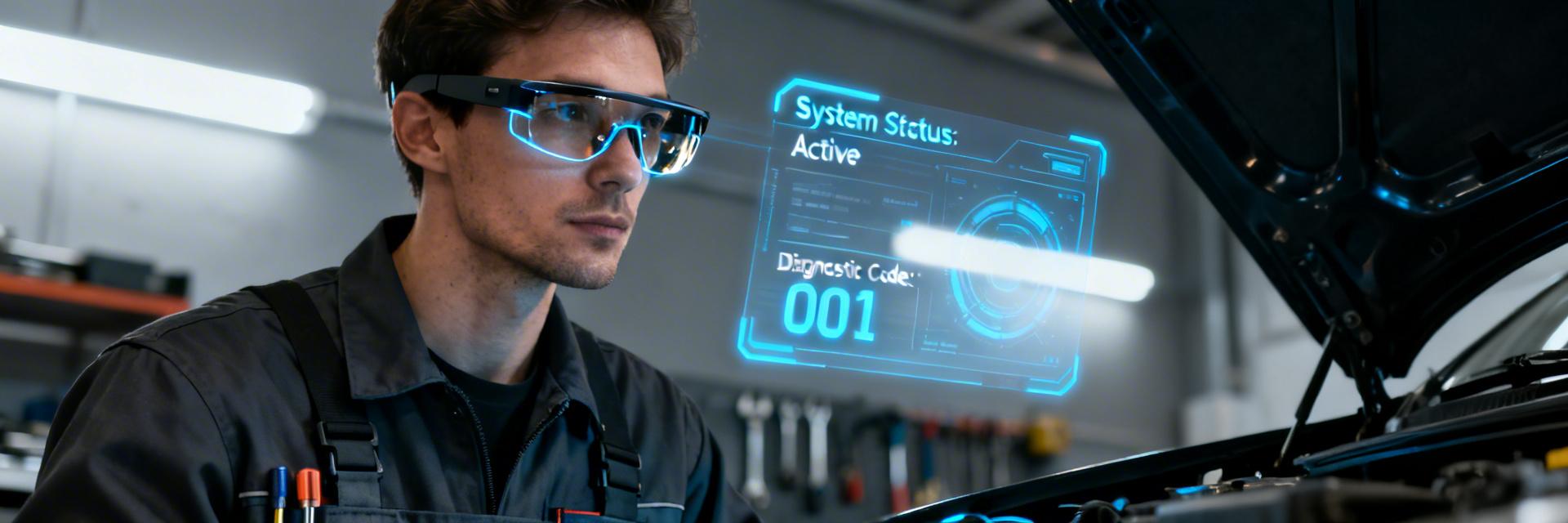
In high-noise industrial environments, ANC smart glasses allow a technician to hear remote instructions clearly while 4-mic beamforming filters out 90% of heavy machinery noise for the remote expert.
Hand-drawn schematic, not a precise circuit diagram
Everyday behaviors shape preferred modes. Commuting, fitness, calls, and media consumption surveys show users favor ambient‑aware modes, seamless call handoffs, and unobtrusive form factors. Persona-driven design and willingness-to-pay insights suggest premium ANC and reliable microphone arrays drive conversion for commuter and prosumer buyers of smart glasses.
Vertical buyers prioritize reliability and compliance. Enterprise use for hands‑free ops, assistive listening in healthcare, and noise‑sensitive industrial environments demand documented ROI and safety compliance. Procurement criteria should include uptime, failure rates, and measured speech clarity; effective noise cancellation can reduce training time and improve operational throughput.
Diverse form factors are emerging. Sunglasses, clear‑lens frames, discreet audio inserts, and full AR devices appear across retail and direct enterprise channels, with subscription firmware and OTA upgrades becoming common. A 2x2 positioning (feature richness vs. price) helps place offerings and supports comparison content such as best noise cancellation smart eyewear anchors for buyer journeys.
Prioritize select audio investments. A focused checklist—sensor selection, on‑device DSP vs. cloud, battery optimization, ambient UX, and real-world testing—aligns with observed performance trade-offs. For an MVP, include robust beamforming mics, baseline ANC, ambient-aware UX, and KPIs such as adoption rate and measured SNR improvement.
Due diligence must be audio‑focused. Validate market data, supply chain resilience, audio IP, and regulatory exposure. Track a 12–18 month roadmap with milestones on sales velocity and NPS. Investors should prioritize firms with defensible audio algorithms and proven real‑world benchmarks to reduce go‑to‑market risk.
Multiple industry reports show accelerating revenue growth. Consumer and enterprise segments value integrated audio, directly raising ASPs and justifying premium investments.
Measure SNR improvement, speech intelligibility, and ANC attenuation curves. Procurement teams should require lab reports plus controlled field trials (transit, office) before deployment.
Pilot high-impact workflows like remote supervision and hands-free operations. Use these pilots to verify noise cancellation benefits and refine ROI metrics before scaling.




{{ boxName }} ({{ dataList?.length || 0 }} Items)
{{ val.manufacturer || val.en_manufacturer || '' }}
auto.lang_Quantity: {{ val.quantity }}
auto.lang_null