News
2026-02-12

By 2025 the smart glasses market shows double‑digit annual growth, and connectivity‑related subsystems increasingly determine development cost and user experience outcomes. This report compares connectivity architectures, quantifies the primary ROI levers, and delivers a pragmatic implementation checklist for product and business teams focused on commercial pilots and scale.
The analysis centers on three core terms: smart glasses, connectivity, and architecture, and embeds decision criteria for enterprise and consumer segments. It is written for US product and engineering leaders seeking metric‑driven choices that shorten payback and reduce device TCO.
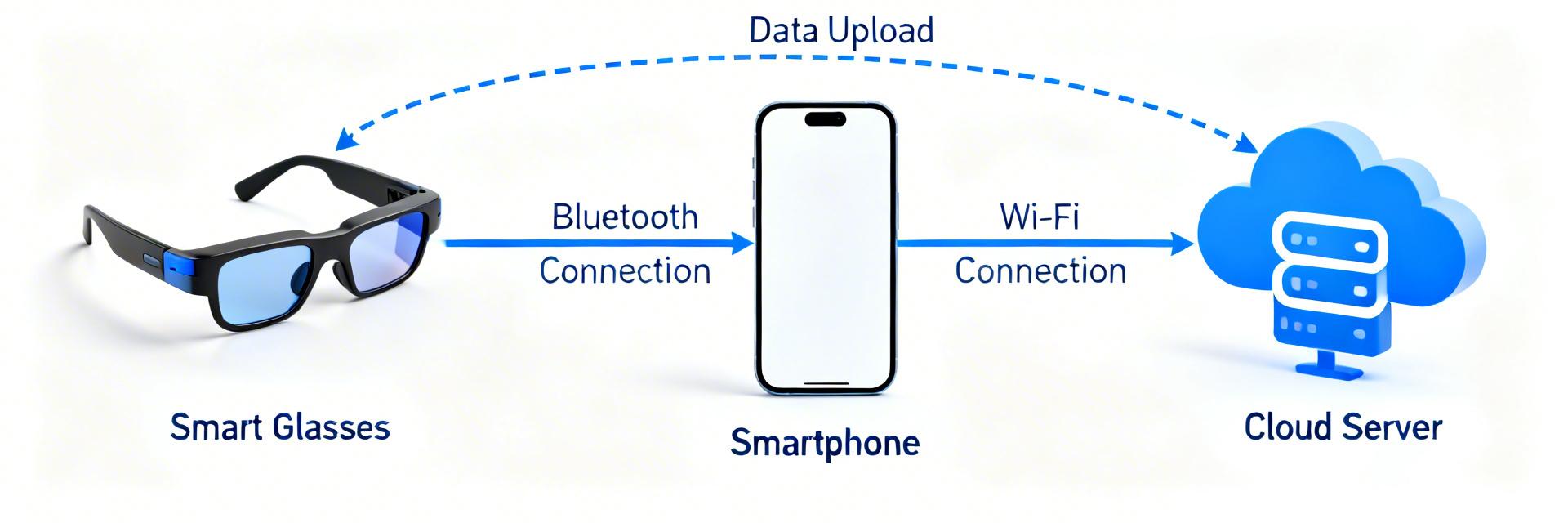
Connectivity enables streamed content, off‑device compute, remote assistance, telemetry, and OTA updates — all of which materially alter UX and monetization paths. For example, tethered streaming shifts cost from device silicon to service fees, increasing subscription potential and reducing on‑device BOM. Measured outcomes include session retention, ARPU uplift from paid features, and lower support costs when remote assist reduces field dispatches.
Design tradeoffs include battery drain per hour (mAh/h), latency (ms), sustained throughput (Mbps), weight and thermal budgets, and regulatory radio bands. Privacy and compliance (industry‑specific) also constrain telemetry granularity. Teams should instrument battery delta per feature, tail‑latency percentiles, and sustained transmit power to determine viable connectivity modes for each form factor and use case.
| Metric | Tethered (Phone) | Edge-First | Hybrid (Recommended) |
|---|---|---|---|
| Relative BOM Cost | Low ($) | High ($$$) | Medium ($$) |
| Latency (End-to-End) | 150ms+ | <20ms | 50-100ms |
| Battery Life | 4-6 Hours | 1-2 Hours | 3-4 Hours |
| Reliability | Dependent on Phone | Autonomous | Fail-safe Fallback |
Enterprise segments (field service, healthcare, logistics) justify higher connectivity investment due to measurable productivity gains. Consumers prioritize form factor and price. Critical KPIs include AR session length and network availability %. Benchmarks should be collected from pilots to model churn sensitivity.
"The silent killer of smart glasses ROI is thermal throttling caused by inefficient radio polling. We recommend a staggered sleep/wake cycle for Wi-Fi 6 modules to preserve the 35°C skin-temperature comfort limit." — Marcus V. Chen, Principal Hardware Architect
Hand-drawn sketch, not a precise schematic
Three archetypes dominate: tethered-to-phone for lowest BOM; edge-first for standalone use; and hybrid for mixed workloads. Decision criteria include power, latency, and marginal cost. Use a weighted matrix to prioritize tradeoffs per segment.
Scenario A (enterprise) targets higher ARPU via subscriptions and productivity savings. Scenario B (consumer) relies on acquisition cost reduction. Key sensitivities include data cost and session length. Enterprise pilots should target payback in <18 months.
Q: Which connectivity architecture is best for enterprise smart glasses?
A: Enterprise deployments often prefer hybrid or edge‑first architectures because their low‑latency and local processing reduce reliance on network quality while preserving cloud augmentation.
Q: How should teams benchmark connectivity for consumer smart glasses?
A: Measure median and tail latency, sustained throughput, and battery drain per session. If tethering enables acceptable UX at much lower BOM, it is often the pragmatic path.
Q: What are the top operational KPIs to track during pilots?
A: Track AR session length, network availability percentage, handover success rate, and per‑session data consumption. These determine whether to scale connectivity investments.




{{ boxName }} ({{ dataList?.length || 0 }} Items)
{{ val.manufacturer || val.en_manufacturer || '' }}
auto.lang_Quantity: {{ val.quantity }}
auto.lang_null